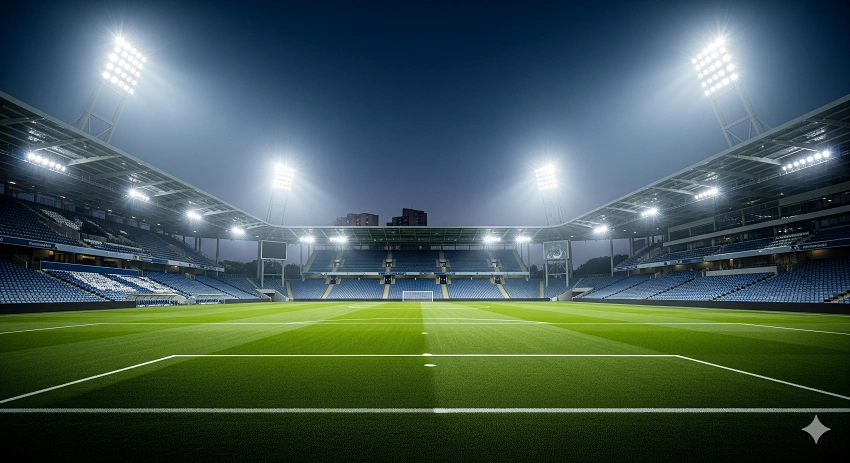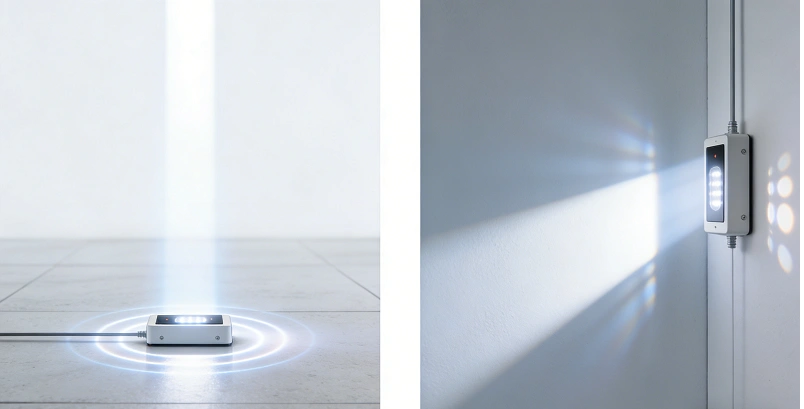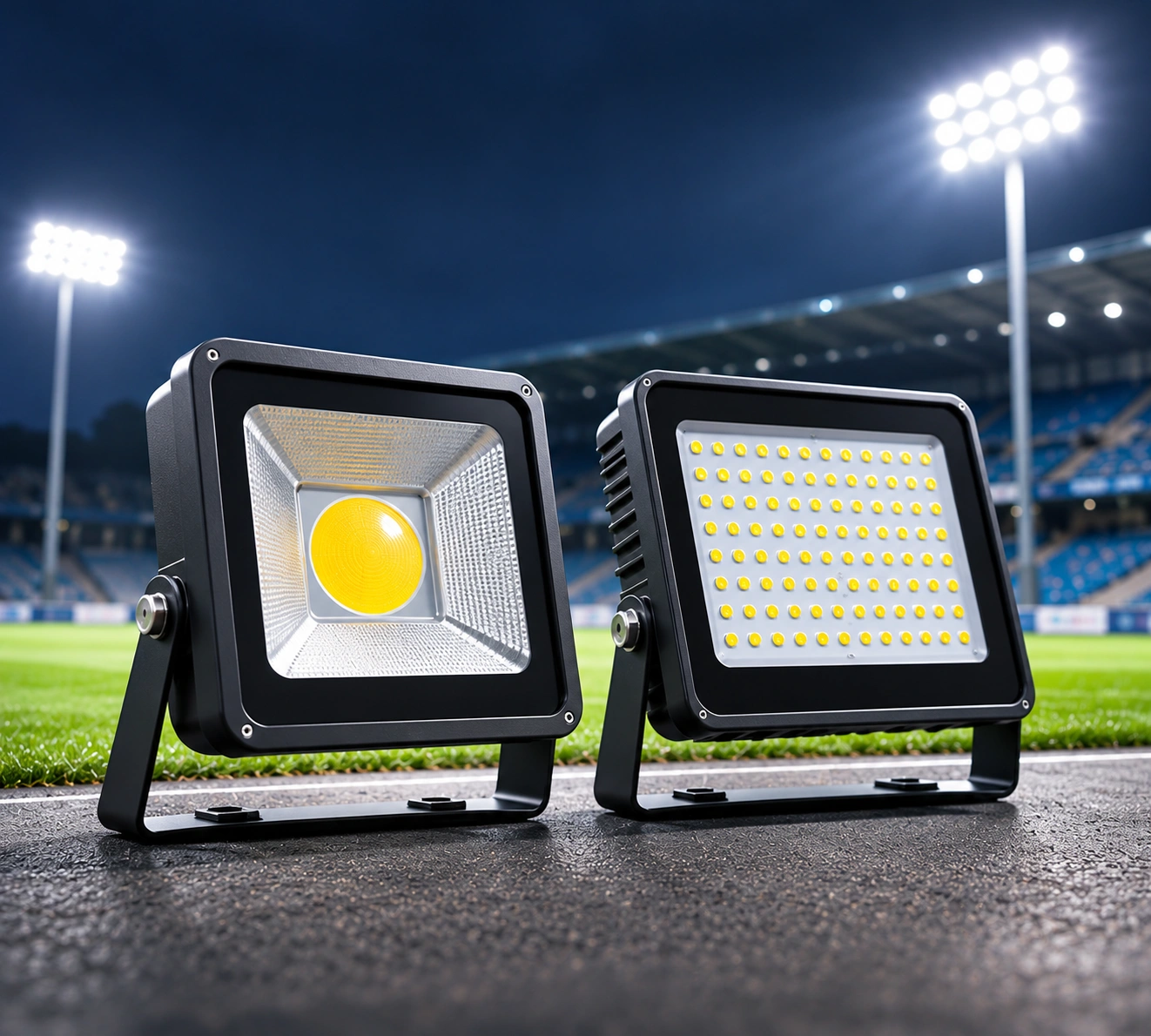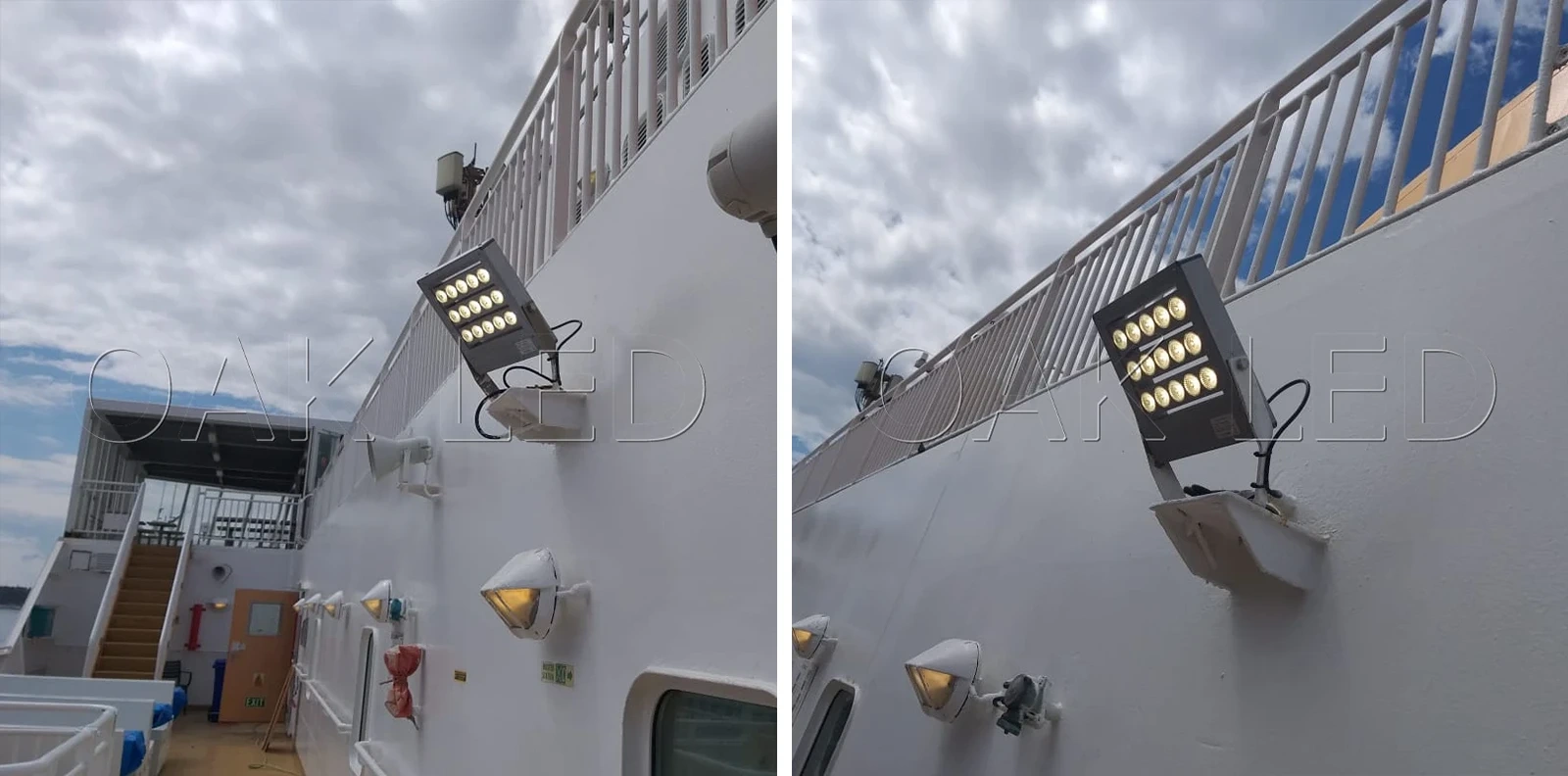
Commercial ships generally need marine-suitable deck floodlights and task lights. Docks rely on lights for gangways, pedestrian routes, berths and loading operations, while seaports often use high-mast and area floodlighting to cover cargo terminals. The right fixture depends on the work area, saltwater exposure, electrical supply and required lighting performance. A light marketed as waterproof is not automatically suitable for shipboard electrical systems or hazardous locations. Start with the job each light must do, then qualify the proposed equipment and verify the installation design.
Match the Fixture to the Work Area, Not Just the Waterfront Address
For vessel decks, shortlist marine-suitable floodlights and fixed task lights; for docks and gangways, combine access-route lighting with berth or loading floodlights; for seaport yards, consider high-mast and large-area luminaires. The same waterfront can contain very different sightlines and mounting constraints, so the fixture shortlist should follow the job at each location.
| Work area | Fixture types to evaluate | Primary lighting task |
| Commercial vessel decks | Marine LED floodlights; fixed deck or task lights | Deck operations, cargo handling and maintenance visibility |
| Docks, piers and gangways | Dock floodlights; walkway and gangway lights | Boarding, pedestrian movement, berth edges and loading |
| Container terminals and cargo yards | High-mast LED floodlights; large-area lights | Vehicle routes, container movement and broad working-area coverage |
| Port cranes and shipyards | Crane-mounted lights; industrial floodlights; local task lights | Equipment operation, fabrication, inspection and repair |
| Classified fuel or chemical areas | Appropriately certified hazardous-area luminaires | Task visibility without introducing unsuitable electrical equipment |
On a commercial vessel, general deck illumination must help the crew work around hatches, winches, equipment and moving loads. A fixed marine LED floodlight can cover an open working deck, but its mounting point and aiming should limit direct glare toward the bridge and other occupied positions. Local work lights may be more useful inside a maintenance space or near a task that falls in the shadow of deck machinery. These are working lights, not substitutes for regulated navigation lights, signal lights or other specialized marine equipment.
Along a dock, lighting has a more fragmented job. People walk from a landside route to a gangway, cross changes in elevation, then work beside moving cargo or vehicles. These transitions and working positions need clear illumination. A central floodlight cannot illuminate every boarding connection or berth edge. Low-mounted route lighting may therefore complement higher floodlights rather than compete with them.
At a seaport terminal, the area expands and so does the distance between mounting points. High-mast systems can distribute light across open yards, traffic routes and handling areas, while industrial or crane-mounted fixtures address more localized operations. OAK LED’s High Mast Lights offer candidate configurations for large-area planning, but their suitability for a specific coastal exposure and installation must be checked separately. The same qualification applies to any general outdoor floodlight proposed for a port.
Fuel and chemical terminals may include both classified and non-classified areas. Use the actual classification to select equipment, without treating every dock as hazardous.
Qualify the Luminaire for Saltwater, Mechanical Loads and Electrical Safety
A marine LED luminaire is suitable only when its complete construction, operating limits and electrical characteristics match the installation. Corrosion protection, water and dust ingress resistance, vibration, mounting strength, supply compatibility and any hazardous-area rules are separate checks. Passing one does not establish the others.
Corrosion protection extends beyond the enclosure rating
Marine durability starts with the housing, coating, bracket, fasteners, seals and cable entries considered together. Exposed deck fittings may encounter spray and washdowns, while sheltered dock structures can face humidity and salt deposits over long periods. Even an enclosure that stays watertight may suffer deterioration at an unprotected bracket or a joint between dissimilar metals.
For that reason, check the housing alloy and protective finish, bracket and bolt materials, and whether wet metal interfaces need suitable isolation or protection. Cable glands and drainage orientation matter as much as the visible body. On vessels or cranes, brackets must tolerate vibration and mechanical loads. A product’s IK impact rating may help with one part of that assessment, but it is not a vibration or structural-approval certificate.
An IP rating addresses enclosure protection against specified ingress conditions, not the corrosive effects of salt. A high IP rating may be necessary for a spray-exposed location, yet it cannot establish lifetime corrosion resistance. OAK LED’s Marine LED Lights range describes an anodized aluminium housing, a 316 stainless-steel bracket and an IP67 enclosure. Those features are useful product-selection inputs; a contractor should still confirm the exact supplied configuration, mounting hardware and evidence for the project’s exposure.
Salt-spray reports need context as well. ISO 9227:2022 defines laboratory salt-spray test methods; the standard does not turn a test-hour figure into a prediction of years at sea. Ask which material or assembly was tested, the exposure method, duration and acceptance conditions. Compare evidence against a defined project requirement rather than treating a larger hour count as a universal durability ranking.
Temperature limits also deserve attention, particularly inside poorly ventilated housings, near industrial processes or in cold operating regions. Confirm the specified ambient range for the proposed driver and complete luminaire instead of assuming that a special-temperature configuration exists on every model.
Shipboard power and electromagnetic compatibility need their own review
Shipboard lighting must match the vessel’s actual power distribution and the installation rules applicable to that equipment. Confirm whether the circuit is AC or DC, its nominal voltage and operating tolerance, protection arrangements, earthing, switching, connectors and cable installation. A shore-side luminaire with an attractive IP rating cannot be assumed compatible with an onboard supply.
IEC 60092-306:2022 covers luminaires and associated lighting accessories used in ships, within its defined scope. It is relevant to the equipment qualification discussion, but it is not a universal certification label for every marine application. Vessel, flag and classification requirements determine the necessary approvals.
Electromagnetic compatibility is especially relevant aboard vessels that depend on communication and control electronics. Immunity, the ability to continue operating when exposed to interference, differs from emissions, the interference the lighting equipment itself may produce. Both aspects should be checked where required. A declaration about immunity alone cannot establish that a luminaire will not disturb sensitive radio or navigation equipment.
Classified fuel and chemical areas require equipment-specific approval
Any luminaire installed inside a classified hazardous area must meet the protection requirements for that exact location. Corrosion-resistant construction or an IP67 enclosure does not make a fixture explosion-protected. Before selecting equipment, obtain the facility’s hazardous-area classification and identify the relevant gas or dust group, equipment protection level or zone, temperature class and installation restrictions.
OAK LED’s Explosion Proof Flood Lights product information describes hazardous-location configurations and lists ATEX and IECEx claims. Those descriptions are not a substitute for checking the certificate for the specific proposed model, marking and operating conditions. If the site is not classified, do not add hazardous-area specifications without an engineering reason; where it is classified, obtain the appropriate evidence before quoting or installing the fixture.
Design for Visibility on Decks, Gangways and Cargo Yards
Decks need task visibility without distracting glare, gangways need clear illumination of walking surfaces and edges, and cargo yards need maintained coverage, uniformity and controlled spill. Mounting height, aiming, obstruction and optical distribution determine whether those outcomes are achieved in the installed scheme.
Consider a crew member working near a deck winch at night. Strong light aimed directly toward the operator may create discomfort or reduce visibility beyond the illuminated patch. Deck machinery and superstructure can also block a broad beam. The designer should evaluate task positions, the operator’s line of sight, critical edges and shadowed areas before fixing floodlight positions. A mixture of area and local task illumination may perform better than one powerful fitting aimed across every operation.
On piers and gangways, people need to recognize steps, surface changes, edges and nearby movement. The relevant question is whether the route remains visible through changes in angle and elevation, not simply whether the surrounding quay records a high average lux value. Lighting should also account for tidal movement or adjustable gangway position where applicable. A fixture mounted at the dock may need different aiming from one on the vessel side of the connection.
Container terminals put a different set of demands on optics. High-mounted floodlights must cover roadways, container handling and open spaces without creating distracting glare for drivers and crane operators. Uneven lighting between masts or shadows from stacked cargo can remain even when the installed wattage looks substantial. Where the site borders residential or sensitive waterfront areas, spill light should be checked alongside operational illumination. A photometric layout helps make these trade-offs visible before poles and brackets are finalized.
The Illuminating Engineering Society’s ANSI/IES RP-40-19 (R2024) addresses permanent lighting for cargo-handling port terminals. It is a relevant design reference for that application, not a substitute for shipboard or temporary-work-light requirements. Project specifications and local obligations should define the maintained-lighting targets and acceptance measurements for the actual facility.
In practice, optical choice follows the work area: tighter or asymmetric distributions can help direct output toward defined targets, while broader patterns can suit open yards when mounting geometry supports them. Beam angle alone cannot establish coverage; check the actual distribution and mounting arrangement. Where controls dim sections of the terminal, operating scenes should preserve the illumination required for active tasks.
Turn Site Information into a Verifiable Lighting Proposal
A verifiable marine lighting proposal brings the buyer’s site brief, the supplier’s exact product evidence and the site-specific photometric layout into one decision record. The buyer defines operating conditions and acceptance criteria; the supplier shows which models are proposed and how the installation performs against them.
Give the designer a complete picture of the installation
Give the designer five groups of project inputs: work areas and activities, mounting conditions, power and controls, environmental and safety exposure, and lighting targets. Label vessel, quayside and terminal zones separately when one project spans different installations.
- Application: vessel deck, berth, gangway, cargo yard, crane or shipyard task, with dimensions and operating activities.
- Installation: mounting heights, pole or bracket positions, fixing constraints, obstacles, orientation and maintenance access.
- Electrical and controls: AC/DC supply, voltage range, circuit arrangements, operating hours, switching and dimming requirements.
- Environment and safety: direct salt spray or sheltered exposure, washdowns, impact, vibration, temperature and any hazardous-area classification.
- Performance: work-zone targets, any required vertical lighting, uniformity, glare or spill limits, and commissioning criteria.
These details are particularly important where a single project combines shipboard, quayside and terminal installations. A product that qualifies for one zone should not be copied automatically to the others. If the supplier proposes a replacement for an existing luminaire, provide the old equipment’s model and available performance records so the change can be assessed against the actual task rather than against wattage alone.
Check the exact product and the designed result
Verify the offered luminaire against model-specific product and approval evidence, then verify the installed result with photometric calculations for that same configuration. Request the datasheet, installation instructions and relevant ingress, impact, corrosion, electrical, EMC, vessel or hazardous-area documentation only where the project requires them.
Where illumination must be demonstrated, use model-specific IES or LDT files in a calculation based on actual mounting heights, aiming and work-zone geometry. DIALux or Relux can help produce the fixture schedule, layout, maintained illuminance, uniformity, glare and any required vertical or spill-light results. Review these as part of the proposed installation, not as generic catalogue claims.
Use a three-stage sign-off: confirm environmental, electrical and safety suitability; approve the proposed lighting calculations; then compare technically qualifying bids for installation, connected power, controls, maintenance access, warranty and delivery.
Fewer high-mast luminaires may reduce mounting positions but increase maintenance access costs. A distributed dockside system may need more wiring but deliver light more accurately. Unit price alone cannot capture those differences.
Two Installation Questions Worth Resolving Before Procurement
Portable work lights and reuse of existing mounting hardware need separate decisions because neither is settled by a general marine lighting specification.
Do Portable Marine Work Lights Follow the Same Requirements as Permanently Installed Shipboard Lights?
Not necessarily. IEC 60092-306:2022 excludes portable luminaires from its scope, so a buyer should identify the applicable requirements for the portable product, power connection and use location rather than applying the fixed-shipboard-luminaire provisions automatically.
Can Existing Ship or Dock Lighting Supports Be Reused During an LED Retrofit?
Yes, if their condition, corrosion protection, load capacity, mounting interface and electrical arrangements are suitable for the new fittings. The contractor should also check that the replacement’s weight, wind exposure and beam direction fit the installation, and confirm the revised lighting performance before retaining the old supports.
Request a Marine LED Lighting Layout for Your Site
Send the completed site brief and drawings to OAK LED to request a free marine lighting assessment, a model-specific fixture schedule and supporting photometric calculations. Before approving procurement, review the proposed materials, electrical interfaces, any location-specific certifications and the calculated lighting coverage against your project’s requirements.