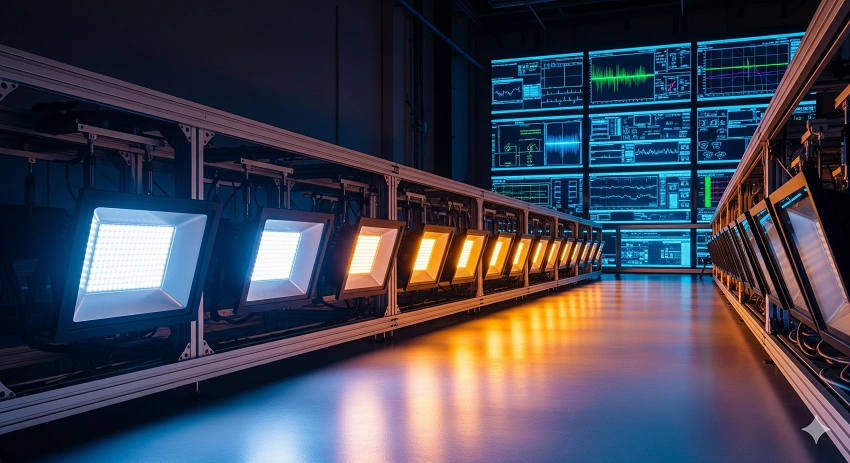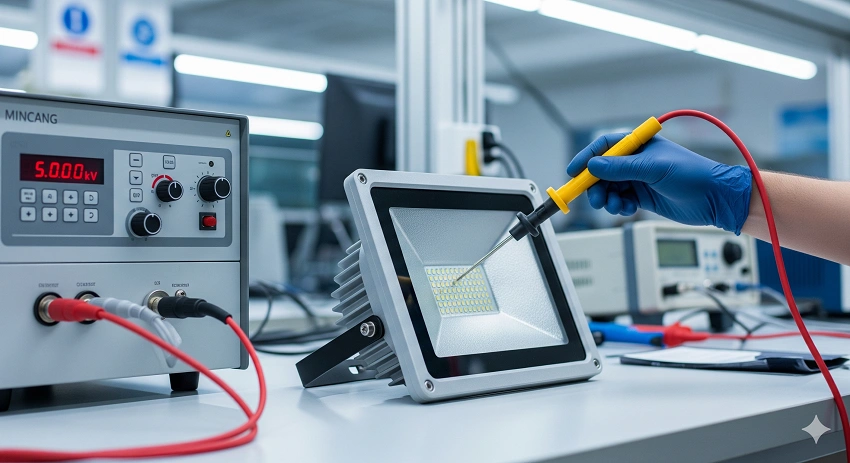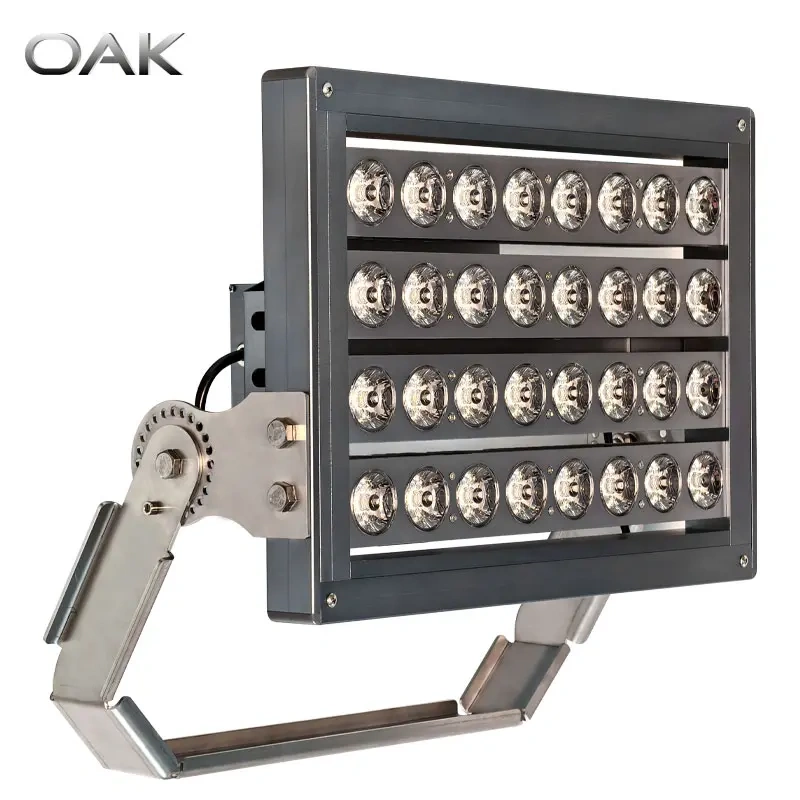
The best lights for filming depend on what you are shooting, how much output you need at the subject, how accurately colors must appear on camera, how much control you need over color temperature and dimming, and whether the light stays stable at your intended frame rate and shutter settings. For professional film, commercial advertising, television production and studio work, wattage alone tells you very little about how useful a fixture will be on set.
A good filming light should provide accurate color, stable flicker-free output, smooth brightness control, a suitable color-temperature range, enough usable output for the working distance, and practical ways to shape the beam. The right choice also depends on modifiers, control workflow, heat management and the size of the production. In other words, the best fixture is the one that gives the camera and crew the control the shot actually requires.
What Makes a Light Good for Filming?
Professional filming lights need to be predictable. A fixture can look bright to the eye and still create problems on camera if colors shift, dimming changes the image, or high-frame-rate footage reveals banding. Start with light quality and control before maximum output.
Color accuracy: CRI, TLCI and R9
CRI indicates general color rendering, while TLCI evaluates lighting from a television-camera perspective. The European Broadcasting Union developed TLCI because CRI was not designed around camera and display reproduction. R9 adds a useful reference for saturated red, relevant to skin tones, fashion, cosmetics, food and many commercial products.
No single metric is a complete quality score. Color also depends on the camera profile, white balance and scene. Production teams can review OAK LED’s LED Photography Lights, specified at CRI/TLCI above 96 and R9 above 95, while matching the final fixture to the actual camera and subject.
Color temperature: daylight, tungsten and adjustable CCT
A fixed color temperature can be enough when a studio controls ambient light and repeats one lighting look. Adjustable CCT is more useful when crews move between daylight, warm practicals and mixed-light scenes, or need quick creative changes without correction gels.
OAK LED Photography Lights provide 2000K-9000K adjustment, while the Film Lights specification lists 2700K-6000K. Buyers should compare the exact fixture instead of treating one CCT range as standard across every filming light.
Why flicker-free performance matters on camera
LED flicker can be invisible to the eye yet obvious to a camera. The interaction between the driver, dimming, frame rate and shutter settings can create banding or pulsing, especially in slow motion or high-frame-rate recording.
Professional buyers should therefore verify flicker performance with the camera settings they plan to use. A “flicker-free” specification is useful screening information, but an actual camera test is the stronger check for demanding production.
How Much Light Output Do You Need for Filming?
Power consumption does not tell you how much usable light reaches the subject. A 300W fixture with one beam distribution and modifier can behave very differently from another 300W fixture with different optics, diffusion or working distance.
Why wattage alone does not tell you how useful a filming light is
Useful output depends on optical design, beam angle, subject distance, modifier losses, desired exposure and ambient light. A softbox improves source size and softness but reduces intensity; a larger set may need more output because the light works farther away or through larger diffusion.
The best lights for filming are defined by the shot, not by one wattage number.
Working distance and beam angle
A tighter beam concentrates light for greater reach, while a wider beam covers more of the set. Neither is automatically better. Close interviews may favor broad, soft light; large sets or background accents may need tighter control.
OAK LED Photography Lights list 15, 25, 40, 60, 90 and 120 degree options, while the 300W page lists 10 to 120 degrees. Choose around working distance, subject size, modifier and the intended look.
How Important Are Dimming and Lighting Controls for Film Production?
Smooth dimming without unwanted color changes
Dimming is not simply a way to make a bright lamp less bright. On set, small level changes can balance the key-to-fill ratio, protect skin highlights, control reflections on glossy products, separate a background, or fine-tune exposure without moving the fixture.
Professional users should therefore compare the usable dimming range, smoothness of adjustment, color stability and flicker behavior while dimming. A light that changes color as output falls can create extra correction work across a multi-shot sequence.
Manual, remote and DMX control
A small studio with one or two fixtures may work efficiently with manual or remote control. As the number of lights grows, centralized control becomes more valuable. DMX can let a lighting team adjust multiple fixtures from one control environment instead of walking between stands for every change.
For productions that require centralized lighting control, OAK LED’s LED Film Lights can be considered where DMX control, adjustable brightness and professional color performance match the production requirements. The current film-light range lists CRI/TLCI of at least 96, 2700K-6000K adjustable CCT and 15-120 degree beam options, with manual and DMX control available.
How Do Light Modifiers Change the Result on Camera?
The fixture creates light; modifiers decide how it reaches the subject. Professional comparisons should therefore include modifier compatibility, not just the LED engine.
Softboxes for softer subject lighting
A softbox increases the apparent source size, softening shadow transitions and specular highlights. It suits interviews, beauty work and talent-led advertising, although diffusion reduces intensity and matters more at longer distances.
Barn doors for controlling spill light
Barn doors do not make a fixture brighter; they restrict spill and shape the beam. They are useful on product shoots, commercial sets and layered setups where light must stay off backgrounds or reflective surfaces.
OAK LED Photography Lights can be paired with softboxes, barn doors and yoke brackets for control over softness, spill and fixture angle.
When a more focused beam is useful
A focused beam helps with longer working distances, background accents or large studio spaces. Optics and modifiers should be planned together: the beam provides reach, while diffusion and shaping tools create the final look.
What Are the Best Lights for Different Types of Filming?
There is no honest “top one” filming light for every production. Different shoots reward different combinations of output, color fidelity, control and modifiers.
Film and cinematic production
Cinematic work often benefits from high color fidelity, reliable flicker performance, precise dimming, beam shaping and controls suited to multi-light production. Thermal design also matters during long sessions.
Commercial and advertising shoots
Advertising often moves between products, models, brand colors and reflective surfaces. Accurate color, adjustable CCT, smooth dimming and practical beam control help crews switch setups without sacrificing consistency.
Studio interviews and corporate video
Interview lighting usually values consistency and control more than maximum wattage. A soft key, controlled fill and separate background or edge light can create a clean result without excessive output.
Product and magazine shooting
Product and magazine work exposes small color and reflection problems. High color accuracy, adjustable output, modifiers and beam shaping help control glossy surfaces, texture and brand colors.
Large studio or higher-output filming
Higher output becomes useful on larger sets, at longer working distances, through large modifiers or against strong ambient light. Those are project conditions, not proof that higher wattage is always better.
For those situations, OAK LED’s 300W LED Photography Lights offer CRI/TLCI 96-class performance, R9 above 95, 2000K-9000K adjustment and 10-120 degree beam options. Select 300W around distance, modifiers, set size and exposure needs rather than as a default filming wattage.
LED vs Tungsten and Fluorescent Lights for Filming
LED is attractive for modern production because it can combine efficiency, adjustable output, flexible CCT and electronic control. It also generally adds less heat to the set than high-power tungsten, although high-output LEDs still need thermal management.
Tungsten remains useful for its familiar warm source and continuous-spectrum character, but it runs hot and warms further as it dims. Fluorescent systems can provide broad, soft light with less heat, while color and dimming behavior vary by system.
LED is not automatically better in every creative situation, but it is often practical when a production values adjustable CCT, electronic dimming, lower on-set heat and centralized control.
How Should Professional Buyers Compare Filming Lights Before Ordering?
Specifications are most useful when tied to a real camera workflow. This checklist keeps comparison focused on factors that can affect the image and production process.
| Comparison Area | What to Check | Why It Matters |
| Color accuracy | CRI, TLCI, R9 | Helps screen for reliable color reproduction |
| Color temperature | Fixed or adjustable CCT range | Determines how easily the fixture matches the scene |
| Flicker | Performance at intended camera settings | Reduces banding and pulsing risk |
| Dimming | Range, smoothness, color stability | Allows precise exposure and lighting-ratio control |
| Output | Usable light at working distance | Shows whether the fixture can light the actual subject |
| Beam | Coverage, focus and available optics | Controls reach and set coverage |
| Modifiers | Softbox, barn doors, mounting accessories | Changes softness, spill and shape |
| Control | Manual, remote, DMX or other required systems | Fits the production workflow |
| Thermal design | Heat dissipation during long sessions | Supports stable long-duration operation |
| Warranty and customization | Coverage plus project-specific options | Supports professional ownership and special requirements |
Test the light with the actual camera workflow
For a professional studio or large commercial order, specifications should narrow the shortlist, not end the evaluation. When practical, test with the cameras, frame rates and modifiers used in production.
Check skin tone, product color, white balance, high-frame-rate footage, dimming transitions, working distance and modifier fit. Real tests can expose issues a catalogue cannot show.
Why Consider OAK LED for Professional Filming Lighting?
OAK LED approaches filming lighting as more than a standard fixture sale. With more than 10 years of lighting-industry experience, OAK LED combines product manufacturing with complete lighting solutions, OEM/ODM support and project-specific customization. Its photography and film ranges cover high-color-accuracy configurations, adjustable color temperature, multiple beam options and professional control methods, backed by a five-year warranty.
That combination is most relevant when a production team needs to match lighting to a defined studio workflow, commercial set or special technical requirement rather than buy the same configuration for every shoot. OAK LED can discuss output, optics, control and customization around the production environment instead of treating one wattage or one fixture label as the answer.
FAQ
Do you need the same filming lights for photography and video?
A: Not always. Both need accurate, controllable light, but video adds continuous-output demands and makes flicker, dimming behavior and long-duration operation more important.
Should filming lights be tested with the actual camera before a large studio order?
A: When practical, yes. Use specifications to shortlist fixtures, then test color, flicker at intended frame rates, dimming, working distance and modifier compatibility with the actual camera workflow.
Choose the Filming Light Around the Production
The best lights for filming are not defined by one wattage or one product label. Start with the production type, then judge color accuracy, flicker performance, CCT, dimming, output, beam control, modifiers and the way the crew needs to operate the lights on set.
Tell OAK LED about your filming environment, working distance, required color temperature, camera workflow and control needs to discuss a professional LED filming-light configuration for your production.