Blogs Page 3 OAK LED

OAK LED

Blogs

LED Common Malfunctions and Solutions

LED Common Malfunctions and Solutions

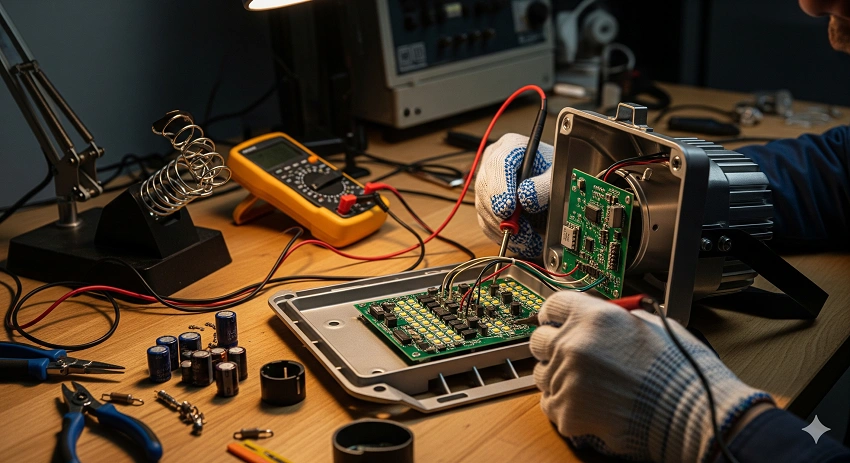
Why LED Lights Fail and How to Fix Them LED lamps have rightfully earned their place as the dominant lighting technology in homes, businesses, and public spaces. Their high brightness, remarkably low energy consumption, and potential for a very long life make them an attractive choice over incandescent and fluorescent alternatives. However, the phrase “LEDs last forever” is a myth. While they are generally robust and less prone to the sudden, catastrophic failures of older bulbs, they are complex electronic devices that can and do malfunction. The good news is that many of the most common LED problems are not…

Read More »
Reasons for the LED light to darken

Reasons for LED Lights to Darken

The Inevitable Dimming of Even the Best LEDs LED lighting has revolutionized the way we illuminate our world, offering unparalleled energy efficiency and lifespans that can stretch for decades. Yet, despite their advanced technology, LED lights are not immortal. A common experience for many users is noticing that their once-brilliant LED lamps or fixtures have gradually become dimmer over time, or perhaps have developed dark patches. This phenomenon, where an LED light loses its original luster, can be frustrating, especially after investing in what was promised to be a long-lasting solution. However, this darkening is not a random event; it…

Read More »
What Is Uniformity of Illuminance

What Is Uniformity of Illuminance?

Beyond Brightness to Evenness When we think about good lighting, the first thing that usually comes to mind is brightness. Is there enough light to see clearly? However, lighting professionals and standards organizations know that brightness alone is not enough. A room or a sports field could have a high average illuminance but still be a terrible place to see if that light is distributed unevenly. Imagine a workspace with a bright, glaring light directly overhead but deep, cavernous shadows in the corners. Or a basketball court that is brilliantly lit under the hoops but dim along the sidelines. This…

Read More »
Comparison Between LED Street Lights And High-Pressure Sodium Lights

Comparison Between LED Street Lights And High-Pressure Sodium Lights

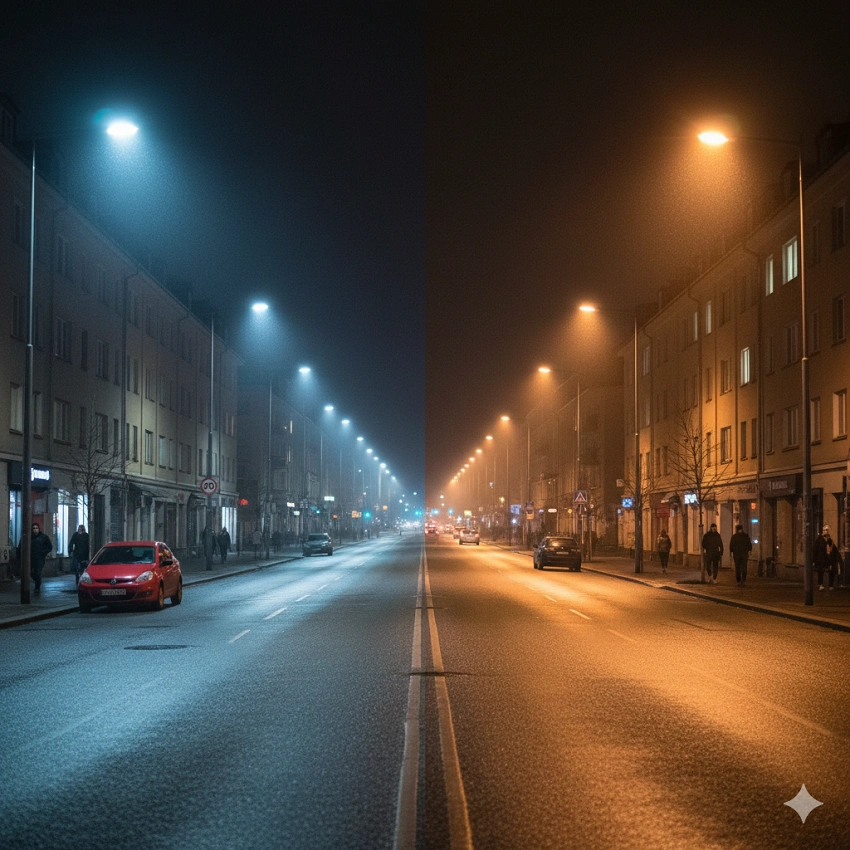
The Global Shift in Roadway Illumination As the world grapples with rising energy demands and the urgent need for carbon emission reductions, every sector is being scrutinized for efficiency gains. Municipal street lighting, a critical but often overlooked public service, represents a massive opportunity. For decades, the skies of our cities have glowed with the familiar amber hue of high-pressure sodium (HPS) lamps. These fixtures were the workhorses of roadway lighting, valued for their longevity compared to earlier technologies and their ability to pierce through fog. However, the 21st century has brought a powerful challenger: the Light Emitting Diode (LED)….

Read More »
Why Aging Test is Necessary for LED Lighting

Why Aging Test is Necessary for LED Lighting

The Hidden Value of an LED That Lasts When you purchase an LED light, you are buying more than just illumination; you are investing in years of reliable, energy-efficient service. The promise of a 50,000-hour lifespan is one of the primary reasons we choose LED over older technologies. However, this longevity is not an accident. It is the result of rigorous engineering and, crucially, a series of demanding quality control procedures performed long before the lamp ever reaches a store shelf. Among the most important of these procedures is the aging test. While it might sound like a simple “burn-in”…

Read More »
What is Total Harmonic Distortion(THD)

What is Total Harmonic Distortion(THD)

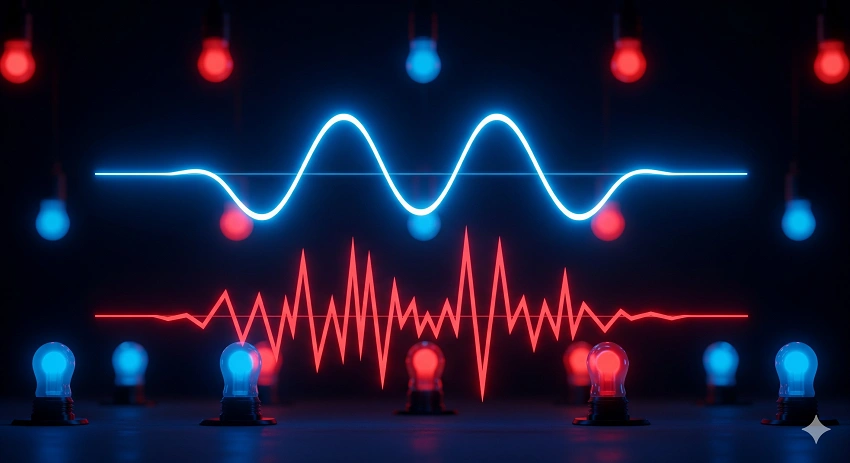
The Hidden Challenge in Modern Power Systems In an ideal world, the electricity flowing through our power grids would be a perfect, clean sine wave—a smooth, predictable oscillation of voltage and current. However, the reality of modern electrical systems, filled with electronic devices, is far from this ideal. Every time you plug in a device with a switch-mode power supply—from your laptop charger to an LED light bulb—it subtly but measurably distorts this perfect waveform. This distortion is quantified by a critical parameter known as Total Harmonic Distortion, or THD. While it might sound like a highly technical concept reserved…

Read More »
The principle of led color temperature adjustment brightness

The principle of led color temperature adjustment brightness

The Magic of Tunable LED Lighting Modern LED lighting has transcended the simple function of illumination. Today, we can adjust not only how bright a light is but also the very color or “warmth” of the light it produces. This ability to tune both brightness and color temperature has revolutionized lighting design, enabling dynamic environments that can shift from an energizing, cool daylight for focused work to a relaxing, warm glow for evening relaxation. But how does this seemingly simple adjustment work? Beneath the surface of a tunable LED bulb or fixture lies a fascinating combination of physics, electronics, and…

Read More »
LED lamp life with LM-80 and TM21

LED lamp life with LM-80 and TM21

Why LED Lifespan Is Different from Traditional Bulbs One of the most celebrated advantages of LED lighting is its extraordinary lifespan. While a traditional incandescent bulb might burn out after 1,000 hours and a compact fluorescent (CFL) after 8,000 hours, a quality LED lamp is often rated to last 25,000, 50,000, or even 100,000 hours. This longevity is a primary driver for the switch to LED in everything from residential bulbs to large-scale industrial and street lighting projects. However, the way an LED reaches the end of its life is fundamentally different from older technologies. An incandescent filament snaps, a…

Read More »
Comparison Between LED Street Lights And HPS

Comparison Between LED Street Lights And HPS

Why the Shift from HPS to LED in Street Lighting is Inevitable Across the globe, a quiet revolution is taking place on our city streets and highways. The familiar orange glow of high-pressure sodium (HPS) lamps, which have illuminated roadways for decades, is gradually being replaced by the crisp, white light of LEDs. This transition is not merely an aesthetic choice; it is driven by the urgent global need for energy conservation and emission reduction. As economies grow and urban populations swell, the demand for energy—and the corresponding strain on resources and the environment—has made efficient public lighting a critical…

Read More »
Why does the LED lamp heat up so severely

Why does the LED lamp heat up so severely

The Paradox of the Efficient LED Running Hot It is a common observation that puzzles many consumers and even some professionals: LED lamps are celebrated for their incredible energy efficiency, yet after being on for a while, their heat sinks become undeniably hot to the touch. If an LED is saving so much electricity compared to an old incandescent bulb, why does it still generate so much heat? This seeming paradox is one of the most frequently asked questions in the lighting world. The answer lies not in the total energy consumed, but in the fundamental physics of how light…

Read More »
The Definition Of Horizontal Illuminance & Vertical Illuminance

The Definition Of Horizontal Illuminance & Vertical Illuminance

What Is Illuminance and Why Does It Matter in Sports Lighting? Illuminance is a fundamental concept in lighting design, referring to the total amount of light incident on a surface per unit area. In simpler terms, it measures how much light actually lands on and illuminates a given surface, whether that’s a playing field, a desk, or a roadway. It is quantified in units called lux, where one lux equals one lumen per square meter. Understanding illuminance is crucial because it directly determines visibility. For sports lighting, illuminance is not just about making the field bright; it’s about ensuring that…

Read More »
Difference between halogen&xenon&LED lamp

Difference between halogen&xenon&LED lamp

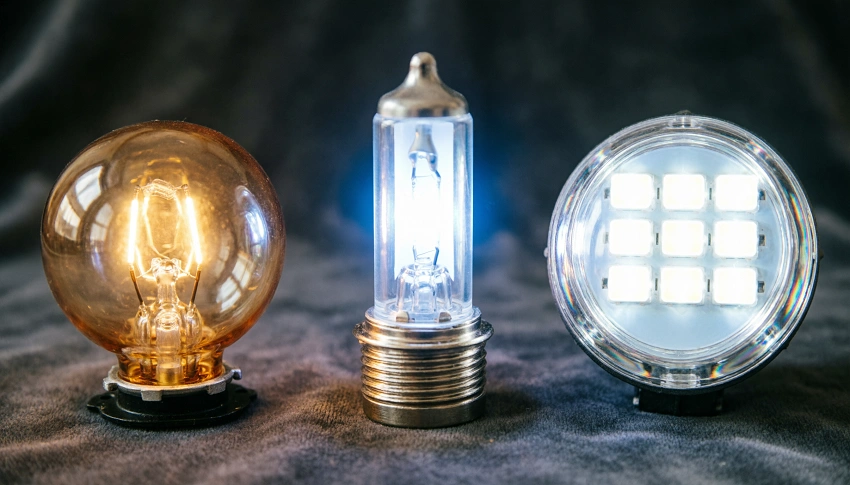
What Are the Main Differences Between Halogen, Xenon, and LED Headlights? For decades, automotive lighting has evolved from simple oil lamps to the sophisticated systems we see on roads today. Currently, three main technologies dominate the market: halogen, xenon (also known as High-Intensity Discharge or HID), and LED (Light Emitting Diode). Each operates on a fundamentally different principle, resulting in distinct characteristics in terms of brightness, color temperature, energy consumption, lifespan, and cost. Understanding these differences is crucial for any car owner looking to upgrade their headlights or simply understand the technology behind their vehicle’s lighting. Halogen represents the traditional,…

Read More »