Blog

LED PWM dimming

LED PWM dimming

What Is LED PWM Dimming and Why Is It So Widely Used? PWM dimming, short for Pulse Width Modulation dimming, has become a dominant and mainstream technology in the world of LED lighting, particularly in LED driver and power supply products. At its core, it is a method of controlling the brightness of an LED by rapidly switching the light on and off. Unlike traditional analog dimming, which reduces brightness by continuously lowering the current flowing through the LED, PWM dimming uses a digital signal to achieve the same effect. This fundamental difference gives PWM several significant advantages, which is…

Read More »
1000W Metal Halide Lamp VS 500W LED Flood Light

1000W Metal Halide Lamp VS 500W LED Flood Light

Understanding the Shift from Metal Halide to LED in High-Power Lighting For decades, the 1000-watt metal halide lamp has been a workhorse in the world of high-intensity lighting. These powerful lamps have illuminated our largest spaces: sports stadiums, industrial warehouses, construction sites, airport hangars, and parking lots. Their ability to produce a high volume of light from a single, relatively compact source made them the go-to choice for applications where flooding an area with light was the primary goal. However, the lighting landscape has been fundamentally transformed by the advent of high-power LED technology. Today, a 500-watt LED flood light…

Read More »
How To Choose LED Basketball Court Flood Lights

How to Choose LED Basketball Court Flood Lights

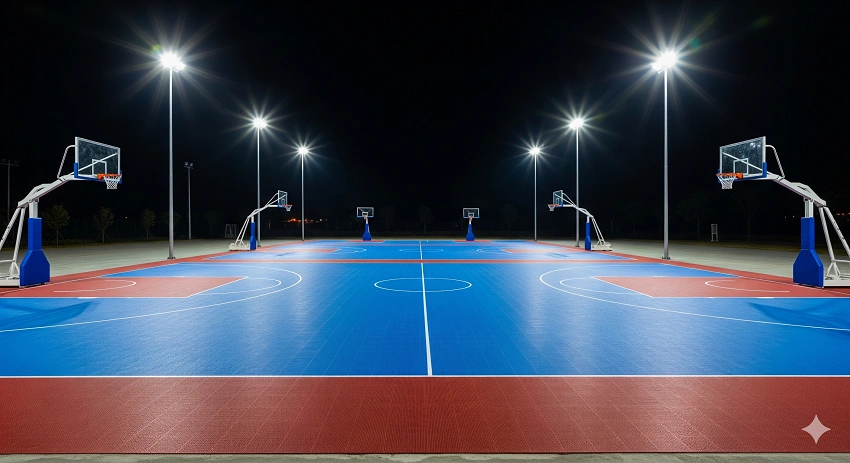
Understanding the Unique Lighting Needs of a Basketball Court Basketball is a fast-paced, dynamic sport played on a defined rectangular court. The action is continuous, with players constantly moving, jumping, and tracking a relatively small orange ball as it’s passed, dribbled, and shot towards hoops positioned ten feet in the air. This unique combination of a defined playing area, fast vertical and horizontal movement, and the need to track a fast-moving object against various backgrounds creates a specific set of lighting requirements. The right lighting does more than just make the court bright; it ensures player safety, allows for optimal…

Read More »
Safety requirements for warehouse lighting

Safety requirements for warehouse lighting

What Makes Warehouse Lighting Different from General Lighting? Warehouses are unique environments that present a distinct set of challenges and hazards not found in typical office or residential settings. They are spaces characterized by high ceilings, narrow aisles, extensive storage racks, and the constant movement of personnel and heavy machinery like forklifts. The lighting in such an environment is not merely for convenience; it is a critical safety system. Poor lighting can lead to serious accidents, including collisions between forklifts and pedestrians, misidentification of goods, falls from heights, and errors in inventory management. Furthermore, warehouses often store large quantities of…

Read More »
The Best LED Stadium Lights For Table Tennis

The Best LED Stadium Lights for Table Tennis

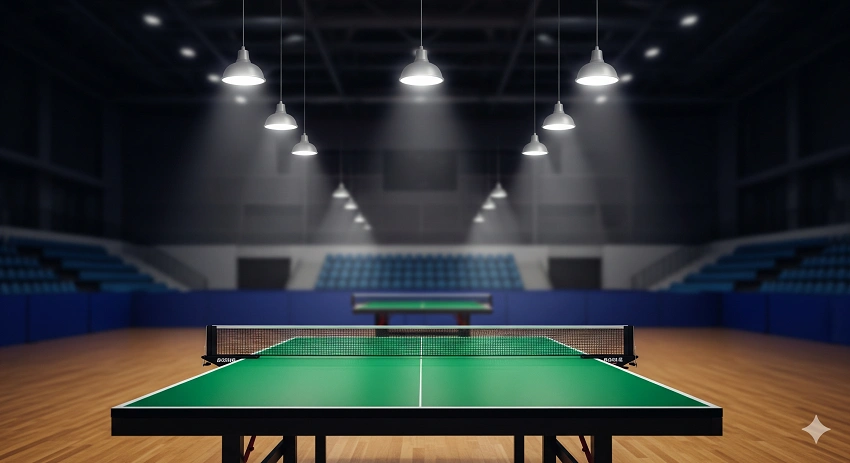
The Unique Lighting Demands of Table Tennis Table tennis, often called ping pong, is a sport of incredible speed, precision, and reflexes. Unlike many other sports played on a large field, the entire action in table tennis is concentrated on a small 2.74m x 1.525m table. The ball, a lightweight sphere just 40mm in diameter, can travel at speeds exceeding 100 km/h. This unique combination of a small, fast-moving object and a confined playing area creates a set of lighting demands that are distinct from almost any other sport. For players to perform at their best, and for spectators to…

Read More »
LED Common Malfunctions and Solutions

LED Common Malfunctions and Solutions

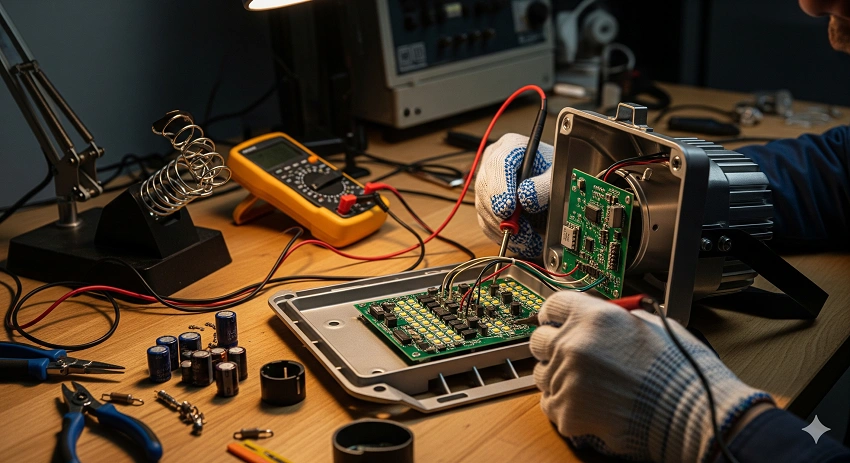
Why LED Lights Fail and How to Fix Them LED lamps have rightfully earned their place as the dominant lighting technology in homes, businesses, and public spaces. Their high brightness, remarkably low energy consumption, and potential for a very long life make them an attractive choice over incandescent and fluorescent alternatives. However, the phrase “LEDs last forever” is a myth. While they are generally robust and less prone to the sudden, catastrophic failures of older bulbs, they are complex electronic devices that can and do malfunction. The good news is that many of the most common LED problems are not…

Read More »
Reasons for the LED light to darken

Reasons for LED Lights to Darken

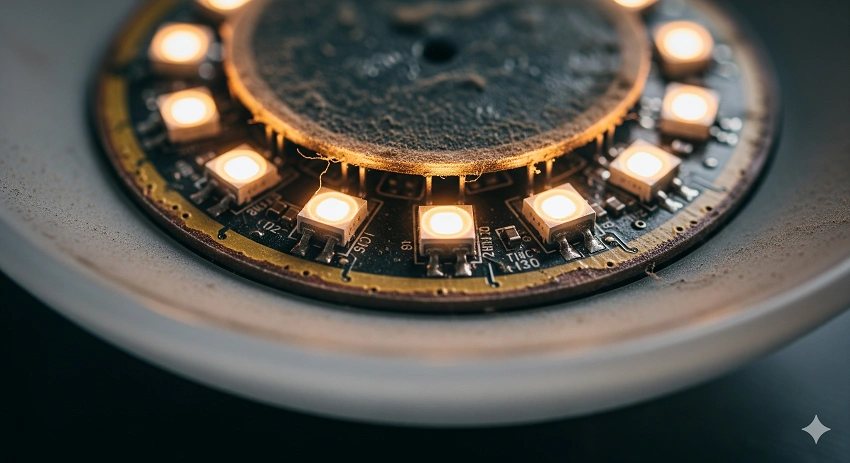
The Inevitable Dimming of Even the Best LEDs LED lighting has revolutionized the way we illuminate our world, offering unparalleled energy efficiency and lifespans that can stretch for decades. Yet, despite their advanced technology, LED lights are not immortal. A common experience for many users is noticing that their once-brilliant LED lamps or fixtures have gradually become dimmer over time, or perhaps have developed dark patches. This phenomenon, where an LED light loses its original luster, can be frustrating, especially after investing in what was promised to be a long-lasting solution. However, this darkening is not a random event; it…

Read More »
What Is Uniformity of Illuminance

What Is Uniformity of Illuminance?

Beyond Brightness to Evenness When we think about good lighting, the first thing that usually comes to mind is brightness. Is there enough light to see clearly? However, lighting professionals and standards organizations know that brightness alone is not enough. A room or a sports field could have a high average illuminance but still be a terrible place to see if that light is distributed unevenly. Imagine a workspace with a bright, glaring light directly overhead but deep, cavernous shadows in the corners. Or a basketball court that is brilliantly lit under the hoops but dim along the sidelines. This…

Read More »
Comparison Between LED Street Lights And High-Pressure Sodium Lights

Comparison Between LED Street Lights And High-Pressure Sodium Lights

The Global Shift in Roadway Illumination As the world grapples with rising energy demands and the urgent need for carbon emission reductions, every sector is being scrutinized for efficiency gains. Municipal street lighting, a critical but often overlooked public service, represents a massive opportunity. For decades, the skies of our cities have glowed with the familiar amber hue of high-pressure sodium (HPS) lamps. These fixtures were the workhorses of roadway lighting, valued for their longevity compared to earlier technologies and their ability to pierce through fog. However, the 21st century has brought a powerful challenger: the Light Emitting Diode (LED)….

Read More »
Why Aging Test is Necessary for LED Lighting

Why Aging Test is Necessary for LED Lighting

The Hidden Value of an LED That Lasts When you purchase an LED light, you are buying more than just illumination; you are investing in years of reliable, energy-efficient service. The promise of a 50,000-hour lifespan is one of the primary reasons we choose LED over older technologies. However, this longevity is not an accident. It is the result of rigorous engineering and, crucially, a series of demanding quality control procedures performed long before the lamp ever reaches a store shelf. Among the most important of these procedures is the aging test. While it might sound like a simple “burn-in”…

Read More »
What is Total Harmonic Distortion(THD)

What is Total Harmonic Distortion(THD)

The Hidden Challenge in Modern Power Systems In an ideal world, the electricity flowing through our power grids would be a perfect, clean sine wave—a smooth, predictable oscillation of voltage and current. However, the reality of modern electrical systems, filled with electronic devices, is far from this ideal. Every time you plug in a device with a switch-mode power supply—from your laptop charger to an LED light bulb—it subtly but measurably distorts this perfect waveform. This distortion is quantified by a critical parameter known as Total Harmonic Distortion, or THD. While it might sound like a highly technical concept reserved…

Read More »
The principle of led color temperature adjustment brightness

The principle of led color temperature adjustment brightness

The Magic of Tunable LED Lighting Modern LED lighting has transcended the simple function of illumination. Today, we can adjust not only how bright a light is but also the very color or “warmth” of the light it produces. This ability to tune both brightness and color temperature has revolutionized lighting design, enabling dynamic environments that can shift from an energizing, cool daylight for focused work to a relaxing, warm glow for evening relaxation. But how does this seemingly simple adjustment work? Beneath the surface of a tunable LED bulb or fixture lies a fascinating combination of physics, electronics, and…

Read More »