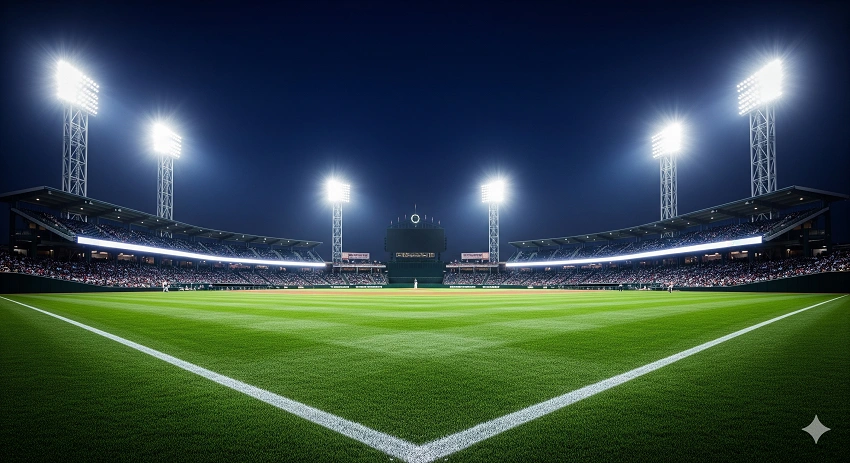
Searching for cheap horse arena lighting usually means one thing: you need a practical way to light the arena without overspending. The lowest-priced fixtures, however, do not automatically create the lowest-cost project. Poor beam distribution can force extra fixtures, leave dark corners or increase maintenance in hard-to-reach locations.
Affordable horse arena lighting starts with matching the lighting level and fixture layout to the arena size, mounting conditions and intended use. A practical budget compares fixture and installation cost with energy use, maintenance access and the lighting performance delivered across the riding surface. In other words, lower total project cost usually comes from the right lighting level, an efficient layout, suitable fixtures and controlled operating costs—not from buying the lowest-priced fixture available.
What Makes Horse Arena Lighting Truly Cost-Effective?
A cost-effective horse arena lighting plan should aim for the lowest practical total project cost while still meeting the required lighting performance. That cost includes fixtures, poles or mounting structures, wiring, electrical work, trenching where required, electricity, maintenance access and future replacement.
Upfront price vs. total lighting cost
| Budget Choice | Possible Advantage | What Buyers Still Need to Check |
| Lower fixture price | Lower initial equipment spend | Fixture quantity, efficiency, reliability, warranty and maintenance access |
| Higher-efficiency configuration | Can reduce energy use over regular operating hours | Actual usable light, optics, output and purchase cost |
| Better optical layout | Can reduce wasted light and unnecessary over-lighting | Coverage, uniformity, glare and final fixture quantity |
Two quotations with different unit prices can produce the opposite result once the full project is calculated. Correct optics may cost more per fixture yet avoid excess wattage or later corrective work.
Where can a horse arena project safely reduce costs?
Good savings come from avoiding over-lighting, unnecessary fixtures and wasted light. Existing poles can sometimes be reused when their condition and geometry are suitable. Zoning or dimming can also reduce unnecessary full-output hours.
Cost cutting becomes risky when it sacrifices glare control, reasonable uniformity, weather protection, electrical safety, secure mounting or the lighting performance required for the intended activity.
How Much Light Does a Horse Arena Actually Need?
Before deciding how many lights to buy, define how the arena will be used. Private riding, lessons, regular training and competition do not automatically need the same lighting level.
The French Institute for Horse and Riding (IFCE) gives useful reference points: for teaching, it recommends an average of about 300 lux for an indoor school, with 200 lux acceptable for training; for an outdoor arena, it recommends about 200 lux, with 100–150 lux acceptable for tests. It also notes that competition conditions may call for around 500 lux. These are references rather than universal rules, so the final target should follow the project’s location, governing standards and competition level.
Private training, riding lessons and competition arenas need different lighting
A private arena used for evening exercise may not need the same specification as a busy riding school or competition venue. Designing every private arena to a high competition target can inflate output, pole requirements and energy use without useful benefit.
Why uniformity matters as much as average brightness
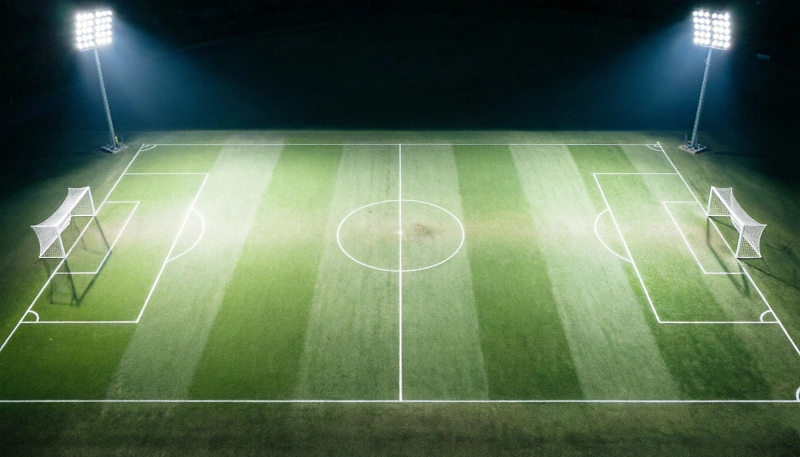
An average lux figure can look acceptable even when corners, rails or the center remain darker. A budget design should check glare, shadows and distribution across the whole riding surface rather than chase one average number. No single uniformity ratio applies to every horse arena; the requirement depends on the project and applicable standard.
How Many Lights Are Needed for a Horse Arena?
Arena length and width matter, but they are not enough to calculate fixture quantity. The design also needs the mounting height, pole positions, target illuminance, beam distribution, fixture output, indoor or outdoor conditions and whether the arena is used for training or competition.
Arena size alone cannot determine fixture quantity
Two arenas with identical dimensions can need different layouts because mounting height and pole positions change aiming and coverage. A retrofit therefore needs current pole locations, mounting details and existing lighting problems before quantity is estimated.
Why fewer high-wattage lights are not always cheaper
Four very powerful fixtures are not automatically cheaper than eight lower-output fixtures. Fewer sources may produce stronger hot spots, darker gaps or harder shadows, and the design may become more sensitive to aiming. The better comparison is the full installed layout and the required performance—not fixture count alone.
Use a photometric layout before buying fixtures
A photometric plan can test quantity, wattage, pole positions, beam angles, aiming and dark areas before equipment is ordered. It reduces the risk of buying too many lights, too few lights or unsuitable optics. OAK LED can provide project-specific lighting design support before production.
Which LED Lights Offer the Best Value for Horse Arenas?
The right fixture category depends on the arena rather than a “best product” ranking. Smaller outdoor arenas, large equestrian facilities and higher-level competition venues can have very different optical and control requirements.
Outdoor riding arenas
Outdoor projects need to consider pole height, throw distance, beam control, rain and dust exposure, glare and spill light. For suitable smaller or general outdoor configurations, OAK LED’s Outdoor LED Flood Lights can be evaluated against the actual coverage and mounting requirements rather than selected simply because they are bright.
Larger equestrian and arena projects
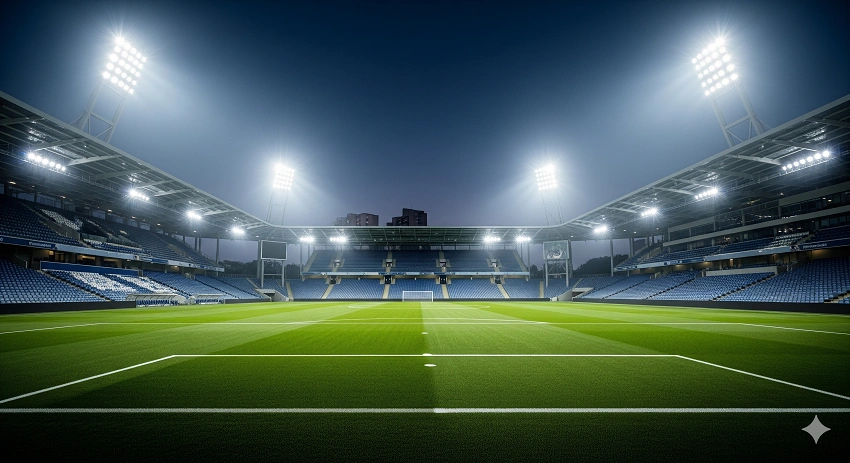
Large arenas, equestrian clubs and competition facilities often benefit from more precise optical control and multi-fixture aiming. OAK LED’s Arena Sports Lighting provides a dedicated arena-oriented option with multiple beam and control configurations, but the final model still needs to follow the site layout and lighting target.
When a professional sports-lighting configuration makes sense
Higher-output venues may need a broader choice of beam angles, tighter spill-light control or centralized dimming. In those projects, OAK LED’s LED Sports Lighting can be considered where its optical and control options match the arena design. A sports-lighting fixture is not automatically necessary for every private riding arena; it becomes valuable when the project requirements justify the added capability.
How Can Layout and Beam Angle Reduce Horse Arena Lighting Costs?
Lighting design can save money before a single fixture is installed because pole positions and optics determine how efficiently light reaches the riding surface.
Pole height and placement affect fixture quantity
Higher mounting changes throw distance and beam requirements; lower mounting can make glare harder to control. Pole count also affects foundations, cable runs and installation. There is no universal “best” mounting height; arena geometry and infrastructure should drive it.
Use the beam angle to put light where it is needed
Narrower beams concentrate light for longer throws, while wider beams cover larger nearby areas. Medium distributions can balance distance and spread. The budget benefit comes from matching those distributions to the arena rather than allowing light to spill beyond the riding surface or adding extra fixtures to correct dark zones created by unsuitable optics.
Control glare and shadows without simply adding more lights
Adding fixtures is not the only way to improve dark areas. Position, aiming, beam overlap, mounting height and optical control can often solve the problem more efficiently. For riders and horses, a well-distributed field of view is usually more useful than a few extremely bright points surrounded by darker areas.
Solar or Wired Horse Arena Lighting: Which Is More Cost-Effective?
Solar can reduce infrastructure cost for a remote private arena with limited evening use, but the calculation still needs sunlight, battery capacity, seasonal runtime and required output.
Wired LED lighting often offers better value for arenas used frequently at night, larger facilities and projects needing predictable continuous output. Compare infrastructure, output, operating frequency and maintenance rather than assuming either option is always cheaper.
What Durability Features Are Worth Paying For?
Some features that raise the initial fixture price can lower future replacement and access costs.
Dust and moisture protection
Indoor arenas can contain footing dust and moisture; outdoor arenas add rain, snow, wind and humidity. Buyers should choose ingress protection and sealing according to the actual installation environment rather than assuming every arena needs the same IP rating.
Do horse arenas require explosion-proof lights?
No—not automatically. In U.S. OSHA terminology, Class II locations are hazardous because combustible dust is present, and the rules distinguish conditions where combustible dust can form explosive or ignitable mixtures from ordinary dusty environments. OSHA also requires areas to be considered individually when determining hazardous classification. A horse arena should therefore not be treated as Class II simply because footing dust is visible. If combustible dust, combustible fibers or another hazardous-area condition may genuinely exist, a qualified professional should classify the area under the applicable local electrical rules before equipment is selected.
Maintenance access matters in the real budget
High-mounted fixtures can require a lift, labor and downtime for replacement. Reliability, thermal management, cleaning access and warranty therefore belong in the budget. OAK LED provides a five-year warranty, which should be reviewed with its scope and the maintenance plan.
How to Build a Practical Horse Arena Lighting Budget
Build the budget in four layers rather than starting with “price per light.” For fixtures, record model, wattage, quantity, optics and controls. For installation, include poles, brackets, wiring, trenching, electrical work and access equipment. For operation, estimate power consumption, operating hours and whether zoning or dimming can reduce unnecessary runtime. For maintenance, include cleaning access, lift requirements, replacement labor and warranty support.
A cost-effective horse arena lighting plan should lower total project cost while maintaining the required coverage—not simply minimize unit price.
What Information Should You Send for an Affordable Horse Arena Lighting Plan?
To get a useful proposal, prepare the arena length and width, indoor or outdoor status, intended use, existing poles or mounting structure, mounting height, pole positions, current lights, electrical supply, target lighting level if known, typical operating hours, project location and available budget.
With those inputs, a supplier can compare fixture quantity, optics, output and layout instead of guessing from arena dimensions alone. OAK LED combines lighting design, manufacturing and customization, including OEM/ODM support, so the project can be configured around the site rather than forced into one standard package.
Why Consider OAK LED for Horse Arena Lighting?
OAK LED approaches arena lighting as a project solution rather than only a fixture sale. The company has more than 10 years of lighting-industry experience, provides complete lighting solutions, supports OEM/ODM and project customization, and offers a five-year warranty. Its dedicated horse arena application guidance also treats arena dimensions, pole height and actual activities as selection inputs for indoor and outdoor projects.
That approach matters when the budget is tight: efficiency helps only when output and optics fit the layout, and customization adds value only when it solves a real project constraint.
FAQ
Can ordinary outdoor flood lights be used in a horse arena?
A: Sometimes. A private or smaller outdoor arena can use a suitable LED flood-light configuration, but brightness alone is not enough. Beam control, glare, uniformity, mounting and weather protection still need to fit the site. Larger or higher-demand arenas may benefit from a professional sports-lighting layout.
Do horse arena lights need to be flicker-free?
A: For ordinary riding, stable visual performance comes first. If the arena is also used for competition filming, slow-motion recording or camera tracking, verify flicker performance at the intended frame rates and shutter settings.
Is a higher-wattage light always cheaper because fewer fixtures are needed?
A: No. Fixture quantity also depends on beam distribution, mounting height, arena dimensions and uniformity. Fewer high-output fixtures can reduce unit count but may create hot spots, dark zones or glare. Compare the photometric layout and total project cost before deciding.
Choose the Budget Around the Arena, Not the Catalogue
The most economical horse arena lighting plan begins with the right lighting target and an efficient layout. From there, compare fixture output, optics, installation, energy use and maintenance as one system. The next step is practical: send OAK LED your arena dimensions, mounting height, existing pole layout and intended use to discuss a project-specific horse arena lighting plan.