The Hidden Challenge in Modern Power Systems
In an ideal world, the electricity flowing through our power grids would be a perfect, clean sine wave—a smooth, predictable oscillation of voltage and current. However, the reality of modern electrical systems, filled with electronic devices, is far from this ideal. Every time you plug in a device with a switch-mode power supply—from your laptop charger to an LED light bulb—it subtly but measurably distorts this perfect waveform. This distortion is quantified by a critical parameter known as Total Harmonic Distortion, or THD. While it might sound like a highly technical concept reserved for electrical engineers, understanding the basics of THD is essential for anyone involved in specifying, installing, or managing large-scale lighting systems. High levels of harmonic distortion can lead to overheated transformers, tripped circuit breakers, malfunctioning equipment, and significant energy inefficiency. For businesses and municipalities investing in LED lighting for its energy-saving potential, ignoring THD can undermine the very savings they hope to achieve. This guide will demystify THD, explaining what it is, how it’s measured, why it’s generated by LED drivers, and why keeping it low is non-negotiable for a safe and efficient electrical installation.
What Is Total Harmonic Distortion (THD)? A Simple Definition
Total Harmonic Distortion (THD) is a measurement that quantifies the amount of distortion present in a signal, specifically in the context of power systems, the distortion of the current or voltage waveform from its ideal, pure sine wave shape. To understand this, we must first understand the concept of harmonics. The fundamental frequency of a power system is its base operating frequency—50 Hz in many parts of the world (including Europe, Asia, and Australia) or 60 Hz in North America. Harmonics are voltages or currents at frequencies that are integer multiples of this fundamental frequency. For a 50 Hz system, the 3rd harmonic is 150 Hz, the 5th is 250 Hz, the 7th is 350 Hz, and so on. THD is the sum of the power (or magnitude) of all these harmonic components, compared to the power of the fundamental frequency. It is essentially a measure of how much “noise” or unwanted frequency energy has been added to the clean fundamental signal. It is typically expressed either as a ratio between 0 and 1 or as a percentage from 0% to 100%. A THD of 0% (or 0) represents a perfect, undistorted sine wave. A THD of 100% (or 1) would mean that the total power in the harmonics is equal to the power in the fundamental, indicating a severely distorted waveform. In practical terms, the lower the THD value, the cleaner and more efficient the power.
How Is THD Calculated and Interpreted?
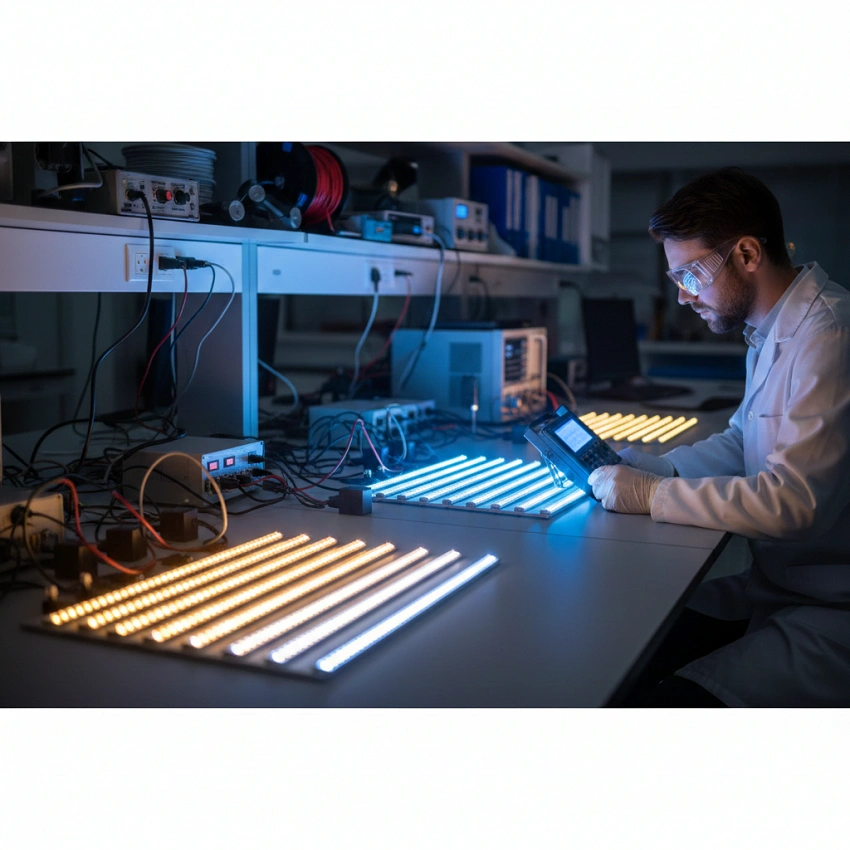
The calculation of THD involves sophisticated signal analysis, but the principle is straightforward. A power quality analyzer measures the electrical signal and performs a mathematical operation called a Fast Fourier Transform (FFT). This breaks down the complex, distorted waveform into its individual frequency components. It identifies the magnitude of the fundamental frequency (e.g., 50 Hz) and the magnitudes of all the harmonic frequencies (e.g., 100 Hz, 150 Hz, 200 Hz, etc.). The THD is then calculated by taking the square root of the sum of the squares of all harmonic magnitudes, divided by the magnitude of the fundamental. The result is then multiplied by 100 to get a percentage. Interpreting this value is key to assessing power quality. A THD value close to 0% means the output current or voltage is a very clean sine wave, with frequency components almost identical to the input. This is ideal. A value approaching 100% means there is a significant amount of harmonic distortion; the signal is contaminated with high levels of other frequencies. For example, a THD of 15% means that the total energy contained in all the harmonic frequencies combined is 15% of the energy contained in the fundamental. This level of distortion is often set as a maximum allowable limit for individual pieces of equipment, as higher levels can start to cause problems in the wider electrical network.
Why Do LED Drivers Generate Harmonic Distortion?
The primary source of harmonic distortion in modern lighting systems is the LED driver. An LED driver is an electronic power supply that converts the incoming AC (alternating current) mains power into the low-voltage DC (direct current) power required by LED modules. The vast majority of these drivers are non-linear loads. Unlike a simple incandescent light bulb, which is a purely resistive linear load that draws a smooth, sinusoidal current, an LED driver does not draw current continuously throughout the AC cycle. Internally, the first stage of a typical LED driver is a rectifier, almost always a diode bridge. This circuit converts the AC waveform into a pulsating DC. The diodes in this bridge only conduct current when the voltage exceeds a certain threshold, which happens only near the peaks of the AC sine wave. This results in the driver drawing current in short, high-amplitude pulses rather than a smooth, continuous wave. This pulsed current is rich in harmonic frequencies. The switching action of the diodes, combined with the high-frequency switching of the driver’s internal power conversion circuitry, effectively chops up the current waveform, injecting these harmonic currents back into the mains power supply. The more non-linear the load, and the more poorly designed its power supply, the more distorted the current waveform becomes, and the higher its THD.
What Happens Inside an LED Driver to Create Harmonics?
To visualize this, imagine the AC mains voltage as a gently rolling hill. A linear load like a heater would draw current smoothly all the way up and down that hill. A non-linear LED driver, however, is like a hiker who only takes very quick, heavy steps at the very top of the hill. The diode bridge rectifier only conducts when the AC voltage is higher than the voltage stored on the driver’s input capacitors. This happens for a very short duration around the positive and negative peaks of the sine wave. The result is a current waveform that consists of narrow, spiky pulses instead of a smooth, broad curve. These sharp, discontinuous pulses are, in the frequency domain, composed of a huge number of harmonics. The fundamental 50 Hz component might be strong, but there will also be significant energy at 150 Hz (3rd harmonic), 250 Hz (5th harmonic), 350 Hz (7th harmonic), and so on. These harmonic currents flow back from the driver into the building’s wiring and out towards the utility transformer. They don’t contribute to doing useful work; instead, they represent wasted energy that sloshes around the electrical system, creating heat and interference.
Why Is Total Harmonic Distortion So Important in Lighting Installations?
The importance of THD stems from the cumulative and damaging effects that harmonic currents have on an entire electrical installation. A single LED driver with high THD might have a negligible impact. However, in a modern building, there could be hundreds or even thousands of these drivers—in the LED lights, computers, monitors, and countless other devices. The harmonic currents from all these non-linear loads add up in the neutral conductors and the distribution transformers. This accumulation leads to a cascade of negative consequences. The most immediate is overheating. Harmonic currents, especially the 3rd harmonic and its multiples (called “triplen” harmonics), do not cancel out in the neutral wire like fundamental currents do. Instead, they add up, causing the neutral conductor to carry significant current even when the phases are perfectly balanced. This can lead to overheated neutrals, a serious fire hazard. Transformers are also designed to handle power at the fundamental frequency; harmonic currents cause increased eddy current losses and hysteresis losses in their magnetic cores, leading to overheating, reduced efficiency, and a shortened lifespan. Circuit breakers and fuses can also be affected, as they may not trip correctly when carrying non-sinusoidal currents, compromising safety.
How Does High THD Affect Power System Efficiency and Other Devices?
Beyond the physical dangers of overheating, high THD significantly degrades the overall efficiency of a power system. The harmonic currents represent wasted energy—they are doing no useful work but are still being generated, transmitted, and dissipated as heat in transformers, wiring, and other equipment. This increases the total current drawn from the utility, leading to higher electricity bills, especially for commercial and industrial customers who may be charged penalties for low power factor, which is closely linked to harmonic distortion. The distortion also interferes with the proper operation of other sensitive electronic devices connected to the same power network. Voltage distortion, caused by the harmonic currents flowing through the system impedance, can cause the zero-crossing points of the voltage sine wave to shift or become noisy. Many electronic devices use these zero-crossing points for timing and control. A distorted voltage can cause them to malfunction, leading to erratic behavior in computers, medical equipment, and industrial control systems. In essence, high THD makes the entire electrical environment “noisy” and unreliable, impacting everything from the lights themselves to the equipment plugged into the wall nearby.
What Is a Good THD Level for LED Drivers and Luminaires?
Given the problems caused by high THD, industry standards and best practices have emerged to define acceptable limits. For modern lighting equipment, it is now common for electrical specifications in new commercial and industrial installations to require that the maximum Total Harmonic Distortion of an individual LED luminaire or driver be less than 20%, and often a more stringent target of less than 15% or even 10% is set. A THD of less than 15% is generally considered good, indicating that the driver’s design includes effective harmonic filtering. A THD below 10% is excellent. This means the driver is drawing a much cleaner, more sinusoidal current, minimizing its impact on the power grid. When planning a large-scale LED retrofit or new construction project, it is crucial to specify luminaires with low THD. While they may have a slightly higher upfront cost than ultra-cheap, high-THD alternatives, the long-term benefits are substantial. They ensure the overall electrical system operates efficiently, safely, and reliably, preventing costly nuisance tripping, transformer overheating, and potential power quality issues that could affect the entire facility. Investing in low-THD LED drivers is an investment in the health and longevity of your entire electrical infrastructure.
Key Aspects of Total Harmonic Distortion (THD)
The following table summarizes the core concepts related to THD in the context of LED lighting.
| Concept | Definition / Explanation | Impact / Significance in Lighting |
|---|---|---|
| Fundamental Frequency | The base frequency of the power system (e.g., 50 Hz or 60 Hz). | The desired, clean sine wave that equipment is designed to use. |
| Harmonics | Voltages or currents at integer multiples of the fundamental frequency (e.g., 150 Hz, 250 Hz). | Generated by non-linear loads like LED drivers; they represent wasted energy and cause distortion. |
| Total Harmonic Distortion (THD) | A measure of the total energy in all harmonics compared to the fundamental, expressed as a ratio or percentage. | A key indicator of power quality. Lower THD means cleaner power and less stress on the electrical system. |
| Non-Linear Load | A load where the current is not proportional to the voltage, drawing current in short pulses. | LED drivers are classic non-linear loads; their design determines how much harmonic distortion they create. |
| Low THD (e.g., <15%) | Indicates a well-designed driver with good power factor correction and filtering. | Minimal impact on the grid, reduced overheating, higher system efficiency, compliance with specifications. |
| High THD (e.g., >30%) | Indicates a poorly designed, low-cost driver with minimal filtering. | Overheated neutrals and transformers, tripped breakers, wasted energy, interference with other devices. |
In conclusion, Total Harmonic Distortion is a critical but often overlooked aspect of lighting quality. It is a measure of the “electrical noise” injected into a power system by non-linear devices like LED drivers. While a certain amount of THD is unavoidable with modern electronics, high levels are detrimental to efficiency, safety, and equipment longevity. For anyone specifying or installing LED lighting, prioritizing luminaires and drivers with low THD—typically less than 15%—is essential for ensuring a reliable, efficient, and safe electrical installation that delivers on the full promise of LED technology.
Frequently Asked Questions About Total Harmonic Distortion
What is a safe or acceptable THD level for an LED light?
For most commercial and industrial lighting specifications, a Total Harmonic Distortion (THD) of less than 20% is considered acceptable, while a THD of less than 15% is preferred and indicates a high-quality driver. Some premium products even achieve THD below 10%. The lower the THD, the less stress on your electrical system and the better the overall power quality.
Can high THD damage other equipment in my building?
Yes, indirectly. High THD, especially from a large number of non-linear loads, can cause significant voltage distortion. This distorted voltage waveform can interfere with the timing and operation of other sensitive electronic equipment, such as computers, medical devices, and programmable logic controllers (PLCs). The primary damage, however, is from overheating of transformers, neutral wires, and motors.
How can I reduce THD in my lighting installation?
The most effective way to reduce THD is at the source: choose LED drivers and luminaires specifically designed for low harmonic distortion. Look for products with a THD specification of less than 15%. In existing installations, it may be possible to install harmonic filters, but this is often complex and expensive compared to simply selecting low-THD products from the start.