Understanding the True Cost of Baseball Field Lighting
When planning a new baseball field or considering an upgrade to an existing one, one of the first and most critical questions is always about cost. However, the answer is rarely a simple single number. The “cost” of baseball field lighting is a multi-layered concept that encompasses far more than just the price tag on the light fixtures themselves. To make a sound, financially responsible decision, one must consider the initial purchase price, the cost of installation, the ongoing operational expenses (primarily electricity), and the long-term maintenance and replacement costs. A cheap fixture that consumes vast amounts of energy and needs to be replaced every two years is, in the long run, far more expensive than a higher-quality, energy-efficient fixture with a long lifespan. This is particularly true for a baseball field, where lighting requirements can be demanding and the hours of operation can be significant. Furthermore, the level of play—from a local little league field to a professional stadium with broadcast requirements—dramatically impacts the complexity and cost of the lighting system. This guide will break down all the components that contribute to the total cost of baseball field lighting, providing a comprehensive overview to help you make an informed choice that balances upfront investment with long-term value.
What Factors Determine the Initial Cost of Baseball Field Lighting Fixtures?
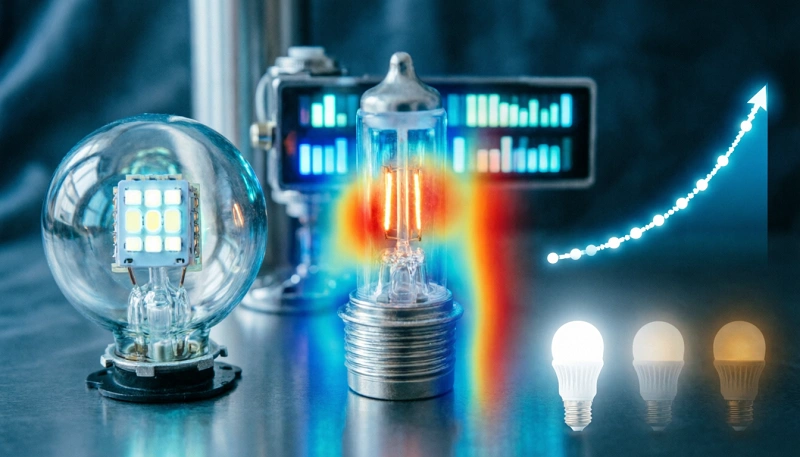
The upfront price of the floodlights themselves is often the first figure a project manager looks at, but this number can vary wildly based on several key factors. The most significant differentiator is the type of lighting technology chosen. Traditional options like metal halide, halogen, or high-pressure sodium (HPS) floodlights have a lower initial purchase price compared to LEDs. A contractor might be tempted by a 500-watt halogen floodlight priced at $50 to $100, seeing it as a budget-friendly option compared to a 500-watt LED floodlight that might cost $450 to $550. However, this is a classic case of “penny wise, pound foolish.” The critical point to understand is that these technologies are not equivalent in performance. The luminous efficiency of a halogen lamp is roughly 10 times lower than that of an LED. This means that to achieve the same level of brightness on the field, you would need approximately ten 500-watt halogen fixtures to replace a single 500-watt LED fixture. The total cost for ten halogen fixtures would be $500 to $1,000, which is actually comparable to or even higher than the cost of the single, superior LED fixture. So, when comparing the price of lighting fixtures, it is essential to compare based on the light output (lumens) required for the field, not just the wattage of a single unit. Buying on price alone without understanding this performance gap can lead to a much higher total fixture cost for a system that delivers inferior light.
How Does the Country of Origin Affect Baseball Field Lighting Costs?
The geographical source of the lighting fixtures plays a substantial role in their pricing. Manufacturing costs vary dramatically around the world due to differences in labor rates, material sourcing, factory overhead, and local economic conditions. Fixtures manufactured in high-cost countries like the United States, the United Kingdom, or other Western European nations will inherently be more expensive. A significant portion of the purchase price goes towards covering these higher operational costs rather than the intrinsic value of the fixture itself. For a buyer, the practical question is how to get the best value without compromising on quality. One effective strategy is to source fixtures from a reputable manufacturer with production facilities in an Asian country, such as China. The cost of manufacturing high-quality stadium lighting can be significantly lower in these regions. However, this approach requires careful due diligence. It is crucial to find a reliable company with a proven track record of quality control and international standards compliance, not just the cheapest option. The price difference can be substantial. For a standard baseball stadium lighting project, the total cost for fixtures purchased from a US manufacturer might range from $120,000 to $200,000. In contrast, a comparable system from a reputable Chinese manufacturer with stringent quality control could be priced between $40,000 and $90,000. This potential saving of 30% to 100% can dramatically reduce the overall project budget and increase profitability, provided the quality and performance are verified.
Why Does the Level of Baseball Competition Impact Lighting Costs?
The required lighting standards for a baseball field are directly tied to the level of competition it will host, and this, in turn, has a direct impact on cost. A field designed for training, recreational use, or a local high school has relatively modest requirements. Achieving these levels might cost between $30,000 and $60,000 for an LED system. The goal here is to provide sufficient, uniform light for safe play and basic visibility. However, the scenario changes dramatically for a stadium intended to host professional or televised tournaments, such as Little League World Series qualifiers or other championships. For these events, the lighting must meet the stringent demands of 4K and 8K television broadcasts. This requires a significant increase in both horizontal and vertical illuminance levels, often reaching 1500-2000 lux or more. To achieve these high levels with the necessary uniformity, more LED floodlights are required, and they must be positioned and aimed with much greater precision. The lighting design itself becomes far more complex, often requiring professional photometric analysis and simulation. The fixtures may also need to have enhanced features like flicker-free drivers for super-slow-motion replays. All of these factors contribute to a higher cost, with total project prices for such professional installations typically ranging from $80,000 to $150,000 or more. The investment is not just in more lights, but in a higher level of engineering and performance capability.
What Are the Long-Term Running and Maintenance Costs of Baseball Field Lighting?
The most significant cost savings from choosing LED technology for a baseball field come not from the initial purchase, but from the long-term operational and maintenance expenses. The running cost is primarily the electricity bill. To illustrate, let’s compare a 30,000-watt LED system with an equivalent-performance halogen system. As established, achieving the same light output would require roughly 300,000 watts of halogen power. Using a US average electricity cost of $0.12 per kilowatt-hour and an 8-hour nightly operation, the daily running cost for the LED system is calculated as ($0.12/1000) * 8 hours * 30,000W = $28.80. For the halogen system, the daily cost is ($0.12/1000) * 8 hours * 300,000W = $288.00. The daily savings with LED is a staggering $259.20. Over a month of operation, this translates to savings of nearly $7,800, and over a year, the savings can exceed $93,000 in electricity alone. These figures make it clear why LEDs are the only logical choice for any facility that operates regularly.
Beyond energy, maintenance costs are a critical factor. Traditional lamps like metal halide and halogen have short lifespans and suffer from rapid lumen depreciation. Their brightness drops significantly over a year or two, making the field dimmer and potentially unsafe or unsuitable for play. They typically need to be replaced every one to two years. This involves not only the cost of new lamps but also the labor cost for replacement, which can be substantial for fixtures mounted high on poles. In contrast, high-quality LED lights have a lifespan of over 80,000 hours. With 8 hours of daily operation, this is over 27 years of use. Their light output remains consistently high for decades. The maintenance cost for an LED system over its lifetime is negligible compared to the recurring expense of regularly replacing traditional lamps. This combination of massive energy savings and virtually eliminated maintenance costs makes the total cost of ownership for LED baseball field lighting dramatically lower, often paying back the initial investment within a few years.
Frequently Asked Questions About Baseball Field Lighting Costs
What is the typical cost for LED lighting a little league baseball field?
The cost for lighting a little league or recreational baseball field with LEDs is significantly lower than for a professional stadium. A complete LED lighting solution for this level of play, including fixtures and design, typically ranges from $30,000 to $60,000. This provides adequate and uniform light for safe and enjoyable games without the high cost of broadcast-level systems.
How long does it take to recoup the investment in LED baseball field lights?
The payback period depends on usage, local electricity rates, and the cost of the previous lighting system. However, for a field switching from halogen or metal halide to LED, the energy savings are so substantial that the initial higher investment in LEDs is often recouped in 2 to 5 years through reduced electricity bills. After this payback period, the savings continue to accumulate for decades.
Does a more expensive lighting fixture always mean better quality?
Not necessarily. Price is influenced by many factors, including brand, country of origin, and included features. A higher price from a Western manufacturer doesn’t always guarantee superior performance compared to a well-made product from a reputable Asian manufacturer. The key is to evaluate the fixture’s specifications: its luminous efficacy (lm/W), its CRI, its warranty, and its supporting photometric data, rather than relying on price alone as an indicator of quality.