The Unique Lighting Demands of Table Tennis
Table tennis, often called ping pong, is a sport of incredible speed, precision, and reflexes. Unlike many other sports played on a large field, the entire action in table tennis is concentrated on a small 2.74m x 1.525m table. The ball, a lightweight sphere just 40mm in diameter, can travel at speeds exceeding 100 km/h. This unique combination of a small, fast-moving object and a confined playing area creates a set of lighting demands that are distinct from almost any other sport. For players to perform at their best, and for spectators to fully appreciate the game, the lighting must be nothing short of perfect. Poor lighting can lead to misjudged shots, eye strain, and a frustrating experience for everyone involved. While traditional lighting technologies like metal halide or high-pressure sodium have been used in the past, they are rapidly being superseded by LEDs. LEDs offer superior energy efficiency, a longer lifespan, and, most importantly for table tennis, unparalleled control over light quality. This guide will walk you through the critical factors to consider when selecting the best LED stadium flood lights for a table tennis court, ensuring a playing environment that is safe, comfortable, and conducive to peak performance.
Why Is Choosing the Right LED Light Crucial for Table Tennis?
The choice of lighting for a table tennis court goes far beyond simply making the room bright. It directly impacts the athlete’s ability to see and react to the ball. The ball’s small size and high speed mean that any deficiency in the lighting—be it poor color, excessive glare, or flicker—can be the difference between a winning shot and a missed opportunity. In professional and even amateur settings, proper lighting is essential for fair competition and player development. Furthermore, as LED technology becomes the standard, replacing older, less efficient systems is a smart economic and environmental move. LEDs consume significantly less electricity, reducing operational costs for schools, clubs, and sports centers. Their long lifespan minimizes maintenance, a crucial factor for lighting installed high in a sports hall ceiling. But the transition to LED is not as simple as swapping one bulb for another. The specific optical and electronic characteristics of the LED fixture must be carefully matched to the sport’s requirements. Choosing a light designed for a warehouse or a general-purpose gymnasium for a table tennis court can lead to poor visibility, player discomfort, and suboptimal playing conditions. Therefore, understanding the key performance indicators—color temperature, color rendering, glare control, and flicker—is paramount.
What Is the Ideal Color Temperature (CCT) for Table Tennis Court Lighting?
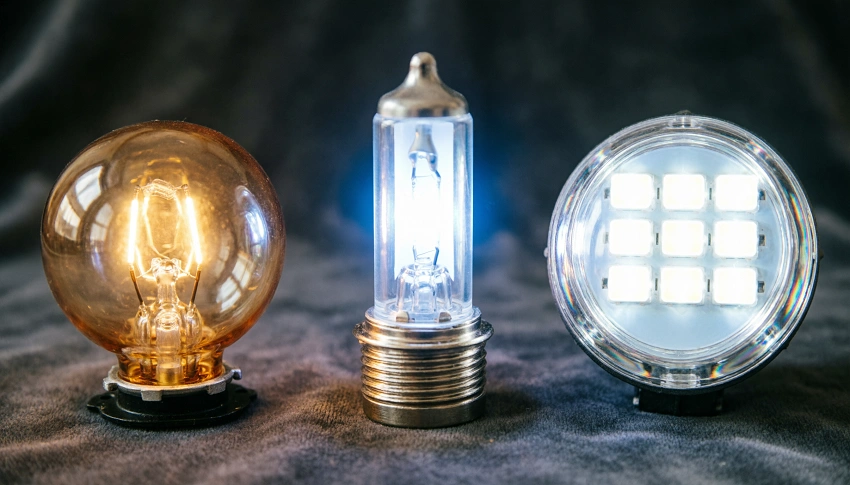
Color temperature, measured in Kelvin (K), describes the visual warmth or coolness of the light. For table tennis, the recommended color temperature is around 5000K. This is often described as “cool white” or “daylight” and is a critical factor for player performance. A 5000K light source provides a crisp, bright white illumination that closely mimics natural daylight at noon. This is crucial because the human eye is evolved to see best under daylight conditions. At this color temperature, contrast is enhanced, and objects appear sharper. For a sport where the ball is small and white (or orange), a 5000K light source ensures that the ball stands out clearly against the background of the court, the walls, and the spectators. Lower color temperatures, such as the warm 2700K-3000K of traditional incandescent or halogen lamps, cast a yellowish hue that can make the ball appear less distinct and can cause colors on the court and players’ clothing to look dull. A cooler temperature above 6000K can introduce a blueish tint that may be harsh and cause eye fatigue over time. The sweet spot of 5000K offers the best balance: it’s bright and crisp enough to provide excellent visibility of the ball’s trajectory and spin, without being uncomfortably harsh, creating the optimal visual environment for the fast-paced action of table tennis.
Why Is a High Color Rendering Index (CRI) Essential for Table Tennis?
While color temperature tells us about the general “tone” of the light, the Color Rendering Index (CRI) measures the light’s ability to reveal the true colors of objects accurately compared to natural sunlight. A high CRI is absolutely vital for table tennis. The standard for sports lighting, especially for broadcast and high-level competition, is a CRI of 80 or higher, but for optimal conditions in table tennis, a CRI of 85 or above is highly recommended. The “R” value often mentioned refers to the average of the first eight standard color samples (R1-R8), but the full CRI includes R9 (saturated red), which is also important. Why does this matter? Table tennis is a game of fine visual cues. Players need to distinguish the white ball from the white lines on the table, see the subtle differences in the colored racket rubbers, and perceive the spin on the ball, which is often indicated by the movement of the manufacturer’s logo or the ball’s surface. With a high-CRI light source, the entire court appears in vibrant, true-to-life colors. The table’s dark blue or green surface is pure and consistent, the white lines are starkly defined, and the ball’s color is accurate. This high color rendering ability provides the player with richer visual information, allowing for quicker and more accurate judgments. It also enhances the experience for spectators, making the game more visually appealing and easier to follow, especially for those watching on a television broadcast.
How Does Anti-Glare Design Improve Performance and Safety?
Glare is the enemy of good vision in any sport, but it is particularly problematic in table tennis. Glare occurs when a bright light source within the field of view causes discomfort or reduces the ability to see objects. In a table tennis court, players are constantly looking up to track the ball’s trajectory, which can often put the overhead lights directly in their line of sight. If the LED stadium flood lights lack proper anti-glare design, this can be disastrous. A player might lose sight of the ball for a split second as it passes in front of a glaring light, which is enough time to miss a return. Effective anti-glare design involves several strategies. The most important is the use of precision optics, such as lenses or reflectors, that tightly control the beam angle. This ensures that light is directed exactly where it is needed—onto the playing surface—and not spilled at high angles into the players’ eyes. Secondary shielding, like deep-set LEDs or added visors on the luminaires, can further block direct views of the light source. The goal is to achieve excellent lighting on the horizontal plane of the table while maintaining a dark, glare-free zone in the players’ typical upward line of sight. A well-designed anti-glare system means that the ball can be seen clearly and accurately from any position on the court and at any point in its trajectory, which is fundamental for fair play and player safety.
Why Is Flicker-Free Lighting Non-Negotiable for Table Tennis?
Flicker, or stroboscopic effect, is an often-overlooked but critically important aspect of sports lighting. It refers to rapid, repetitive fluctuations in light output, which can be imperceptible to the naked eye but have a profound impact on the perception of fast-moving objects. For table tennis, a flickering light source can be a major problem. When the ball is moving at high speed, a flickering light can create a stroboscopic effect, making the ball appear to have multiple “ghost” images or a trail behind it. This phenomenon, known as “double shadow” or “shadow tail,” makes it incredibly difficult for a player to accurately judge the ball’s true position, speed, and spin, leading to mistimed shots. The cause of flicker is often the LED driver. Low-quality drivers may not provide a perfectly smooth and stable current to the LEDs, resulting in these micro-fluctuations in light output. The best LED stadium lights for table tennis utilize high-quality, constant-current drivers that ensure a perfectly stable and smooth luminous flux. This eliminates any perceptible or imperceptible flicker. The result is a clean, sharp image of the ball at all times, with no distracting trails. This not only allows players to perform at their best but also ensures visual comfort for players, officials, and spectators, preventing eye strain and headaches that can be caused by exposure to flickering light over a long match.
Key Factors Summary for Choosing Table Tennis LED Lights
To simplify the selection process, the following table summarizes the four critical lighting parameters for a professional table tennis court.
| Parameter | Recommended Specification | Reason / Benefit |
|---|---|---|
| Color Temperature (CCT) | 5000K (Cool White / Daylight) | Provides crisp, bright illumination that enhances contrast, making the small ball clearly visible against the court background. |
| Color Rendering Index (CRI) | ≥ 85 (Ra) | Ensures true-to-life color reproduction of the ball, table, lines, and surroundings, providing richer visual information to players. |
| Anti-Glare Design | Precision optics, shielded luminaires | Prevents light sources from dazzling players when they look up, ensuring the ball is always visible against a dark background. |
| Flicker Performance | Flicker-free (stable luminous flux) | Eliminates the stroboscopic effect, ensuring the ball appears as a single, sharp image without distracting double shadows or tails. |
Additional Considerations: Illuminance and Uniformity
Beyond the four key parameters discussed, two other fundamental lighting metrics must be considered for a complete design: illuminance and uniformity. Illuminance is the amount of light falling on the surface, measured in lux. For table tennis, the required illuminance varies by the level of play. For recreational or club play, an average illuminance of 300-500 lux on the playing area might be sufficient. For regional competitions, 500-750 lux is typical. For national and international tournaments, especially if they are televised, the requirements are much higher, often demanding 1000 lux or more on the table surface. Uniformity is the ratio of minimum to average illuminance (U0). A high uniformity (e.g., U0 ≥ 0.7) means the light is spread very evenly across the court, with no dark patches. This is vital for table tennis, as a dark spot on the table could be exactly where the ball bounces, causing a player to misjudge it. Both illuminance and uniformity work in tandem with CCT, CRI, glare control, and flicker performance to create the perfect visual environment. A complete lighting design for a table tennis court must consider all these factors, and professional software is used to simulate and optimize the placement of LED flood lights to meet or exceed the standards set by governing bodies like the ITTF (International Table Tennis Federation).
In conclusion, selecting the best LED stadium lights for table tennis is a specialized task that goes far beyond basic illumination. It requires a focus on the specific visual needs of a sport defined by a small, fast-moving object. By prioritizing a 5000K color temperature, a high CRI of 85 or above, rigorous anti-glare optics, and completely flicker-free operation, you can create a lighting environment that allows players to see the ball with unparalleled clarity. Combined with the correct illuminance levels and high uniformity, this investment in quality LED lighting will enhance player performance, ensure spectator enjoyment, and provide a safe, comfortable, and energy-efficient solution for years to come. For expert guidance and customized solutions for your table tennis court lighting project, consulting with a specialized provider like OAK LED ensures that every detail is addressed for optimal results.
Frequently Asked Questions About Table Tennis Court Lighting
How many lux are needed for a professional table tennis tournament?
For professional and international-level table tennis tournaments, especially those intended for television broadcast, the required illuminance is typically 1000 lux or higher on the playing surface. This high level ensures that high-speed cameras can capture clear images and that players have optimal visibility for the fastest rallies.
Can I use regular LED shop lights for a table tennis court?
While they might provide some light, regular LED shop lights are not suitable for a table tennis court. They typically lack the necessary optical control, leading to significant glare for players. They may also have poor color rendering (low CRI) and noticeable flicker, all of which would severely impair a player’s ability to see the ball clearly and comfortably.
Is 4000K or 5000K better for table tennis?
5000K is generally considered better for table tennis. While 4000K is a neutral white, 5000K is closer to actual daylight and provides a crisper, brighter light that offers better contrast. This enhanced contrast makes it easier for players to track the small white ball against the court background, which is why it is the recommended color temperature.