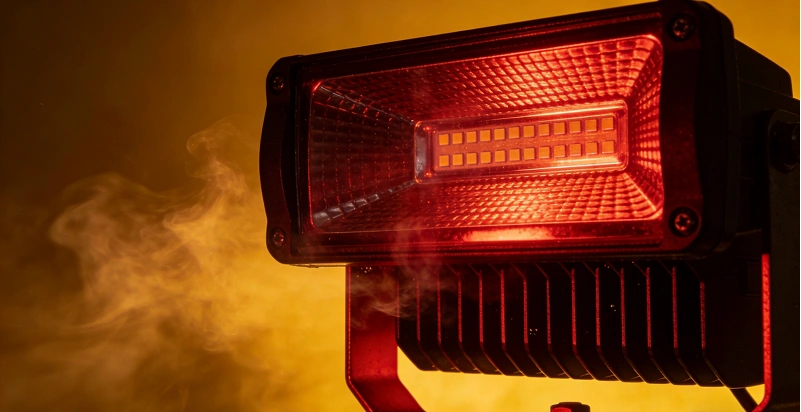
The Inevitable Dimming of Even the Best LEDs
LED lighting has revolutionized the way we illuminate our world, offering unparalleled energy efficiency and lifespans that can stretch for decades. Yet, despite their advanced technology, LED lights are not immortal. A common experience for many users is noticing that their once-brilliant LED lamps or fixtures have gradually become dimmer over time, or perhaps have developed dark patches. This phenomenon, where an LED light loses its original luster, can be frustrating, especially after investing in what was promised to be a long-lasting solution. However, this darkening is not a random event; it is typically the result of one of three primary causes: a failing driver, the physical burning out of individual LED chips, or the natural, unavoidable process of lumen depreciation. Understanding these three distinct reasons is key to diagnosing the problem, deciding whether a fix is possible, and knowing what to look for when purchasing future LED products to ensure you get the longest and most reliable performance. This guide will delve deep into each of these causes, explaining the “why” behind the dimming and offering practical insights into solutions and prevention.
How Does the LED Driver Cause Lights to Dim or Fail?
At the heart of every LED light that runs on mains power (like the 120V or 220V AC in our homes) is a critical component called the LED driver. An LED chip is a low-voltage DC device, typically requiring less than 20 volts to operate. Our home electricity is high-voltage AC. The driver’s job is twofold: first, to rectify the AC power to DC, and second, to step down the high voltage to the low, safe voltage that the LEDs need. But its most important function is to provide a constant current. LEDs are current-driven devices, and even small fluctuations in current can drastically affect their brightness and lifespan. A high-quality driver ensures a stable, steady flow of power. In theory, as long as the driver’s electrical parameters perfectly match the requirements of the LED array, it should provide trouble-free operation for many years. However, the internal circuitry of a driver is complex, containing components like capacitors, rectifiers, transformers, and integrated circuits. Each of these components has a finite lifespan and can be susceptible to heat stress, voltage spikes, and general wear and tear. For instance, electrolytic capacitors, which are common in drivers, are particularly prone to drying out and losing their capacitance over time, especially in high-heat environments. When any of these internal components begin to fail, the driver’s output voltage or current can become unstable. It might drop below the required level, causing the entire light to dim uniformly. This is one of the most common reasons for an LED light to gradually get darker without any individual LEDs appearing to be burnt out.
What Are the Signs of Driver Failure and Can It Be Fixed?
Driver failure is arguably the most frequent fault in LED luminaires, and it manifests in several ways. The most obvious sign is a light that has become noticeably dimmer across the entire fixture. You might also observe flickering, which indicates that the driver is struggling to maintain a constant current. In some cases, the light might turn on but then shut off after a few seconds or minutes as a thermal or over-current protection within the driver trips. A buzzing sound emanating from the base of the lamp or the driver housing can also be a telltale sign of internal component stress or failure. The good news is that a failed or failing driver is often the easiest problem to fix, provided the luminaire is designed with a replaceable driver. In many commercial and industrial LED fixtures, the driver is a separate, modular component that can be unplugged and replaced with a new one that has the correct output specifications. For some consumer-grade integrated LED bulbs, the driver is often built into the base and is not replaceable, meaning the entire bulb must be discarded. However, for larger fixtures like panel lights, floodlights, or street lights, replacing the driver is a cost-effective repair that can give the light a whole new life. When replacing a driver, it is crucial to match the output voltage and, most importantly, the constant current rating to the specifications of the LED array to avoid damaging the new driver or the LEDs themselves.
Why Do Individual LED Chips Burn Out and Cause Darkening?
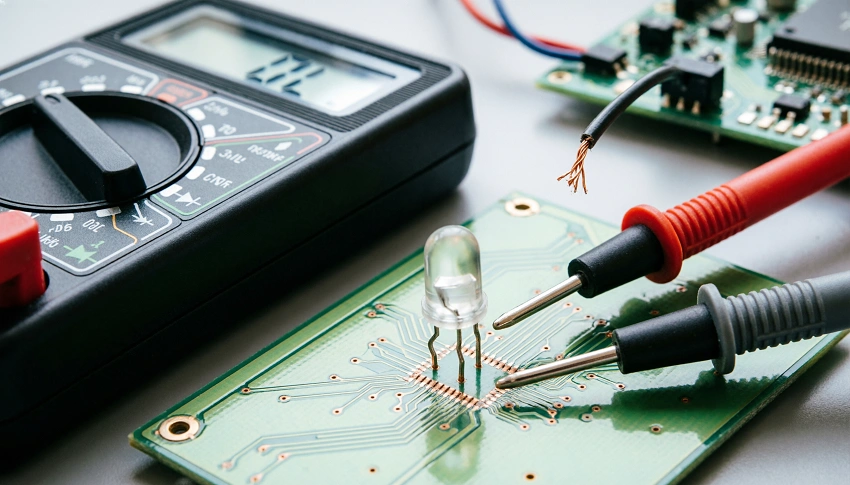
An LED lamp or fixture is not a single, monolithic light source; it is an array of many individual LED chips, sometimes dozens or even hundreds. These chips are typically arranged in a series-parallel configuration. This means that several chips are connected in a string (series), and then multiple strings are connected in parallel. This design allows the fixture to operate at a practical voltage while providing redundancy. However, it also creates a vulnerability. If a single LED chip fails and becomes an open circuit, the entire series string it belongs to will go dark because the electrical path is broken. This will result in a noticeable dark section on the light panel or a significant reduction in overall light output from a floodlight. A failed LED chip is usually easy to identify visually. When an LED burns out, it often develops a small black spot or a dark discoloration on its yellow phosphor surface. This is caused by localized overheating and burning of the internal semiconductor or the bonding wire. Finding a burnt chip is a matter of close inspection. If you locate one, a skilled repair person might be able to fix it by carefully soldering a wire across the back of the circuit board to short-circuit the failed chip, effectively removing it from the series string. This bypasses the dead component and restores power to the rest of the chips in that string. However, this is a delicate repair and will cause the remaining chips in that string to run at a slightly higher current, potentially shortening their life. A more permanent and proper fix is to desolder the failed chip and replace it with a new one of the exact same specifications.
When Burnt Chips Indicate a Deeper Driver Problem
While a single burnt-out LED chip can happen randomly due to a manufacturing defect, it is a significant red flag if you see multiple chips burning out, or if a fixture suffers from recurring chip failures. It is a statistical coincidence for an LED to burn out one at a time under normal conditions. If the problem is frequent or widespread, it is almost always a symptom of a failing or improperly matched driver. This is another critical manifestation of driver failure: instead of simply dimming, the driver may start to output excessive current or voltage spikes. This overdrives the LED chips, pushing them beyond their safe operating limits. The excessive current causes them to overheat and burn out, often spectacularly, leaving behind those telltale black spots. In this scenario, simply replacing the burnt chips is a futile exercise, as the new chips will likely suffer the same fate as soon as the faulty driver sends another surge. The correct and only lasting solution is to first diagnose and replace the faulty driver. Once a stable, correctly rated driver is installed, you can then proceed to replace the burnt chips or, in many cases, it might be more efficient to replace the entire LED array or light engine if the damage is extensive. This interplay between driver and chips highlights how the health of the entire system is interdependent.
What Is Lumen Depreciation and Why Does It Cause Gradual Darkening?
The third and most inevitable reason for an LED light to darken is a phenomenon known as lumen depreciation. Unlike the sudden failure of a driver or the dramatic burnout of a chip, lumen depreciation is a slow, gradual process. It is the natural aging of the LED itself. All light sources, from the sun to incandescent bulbs, experience this, but the rate varies dramatically. An incandescent bulb might show noticeable dimming over its short life, but an LED’s depreciation is much slower, which is why it’s often difficult to see with the naked eye from day to day. Lumen depreciation is caused by the slow degradation of the materials within the LED chip and its phosphor coating. The high-energy blue light generated within the chip gradually degrades the semiconductor material and the epoxy resins used to encapsulate it. The phosphor, which converts some of that blue light to yellow to create white light, also slowly loses its efficiency. This means that over tens of thousands of hours, the chip’s ability to convert electricity into light diminishes. High-quality LEDs from reputable manufacturers have excellent “lumen maintenance,” meaning their light output declines very slowly. They are typically rated to reach L70 (70% of initial brightness) after 50,000 hours or more. However, this rate is not fixed for all LEDs.
What Factors Accelerate Lumen Depreciation in LEDs?
While some level of lumen depreciation is unavoidable, its speed is highly dependent on operating conditions, most notably heat. The single biggest enemy of an LED is high temperature. An LED chip’s junction temperature (the temperature at the point where light is generated) is the primary driver of its degradation rate. The hotter the chip runs, the faster its materials will degrade, and the quicker it will lose brightness. This is why thermal management—the design of heat sinks and the provision for airflow—is absolutely critical in LED fixtures. A well-designed light with a large, efficient heat sink will keep the LED chips cool, ensuring they slowly depreciate over their projected lifespan. Conversely, an inferior LED light, or one with poor heat dissipation (perhaps installed in an enclosed, non-ventilated fixture it wasn’t designed for), can run very hot. In these cases, the lumen depreciation rate can be drastically accelerated. The light might lose 30% of its brightness in just a few thousand hours, rather than 50,000. This is a common issue with low-cost, no-name LED products where corners are cut on thermal design. So, while lumen depreciation is the “natural” cause of darkening, its speed is a direct reflection of the quality of the LED chip itself and, more importantly, the effectiveness of the fixture’s thermal management. Investing in a quality product from a reputable brand like OAK LED ensures that the “natural” darkening will be so slow as to be almost imperceptible over many years of service.
Diagnosing the Three Main Reasons for LED Darkening
The following table provides a quick reference to distinguish between the three primary causes of LED lights becoming dimmer.
| Cause of Darkening | Primary Symptoms | Visual Clues | Typical Solution |
|---|---|---|---|
| Driver Failure | Uniform dimming across the entire fixture, flickering, buzzing, or complete failure to light. | No visible damage to LED chips; the light dims or flickers as a whole. | Replace the LED driver with a new, correctly matched unit. |
| Burnt LED Chips | Dark spots, sections, or patches on the light panel; overall brightness reduced but uneven. | Visible black spots or discoloration on the surface of individual LED chips. | Short-circuit the dead chip (temporary) or replace it. If frequent, check the driver first. |
| Lumen Depreciation | Very gradual, uniform dimming over years of use. No sudden changes or flicker. | No visible defects; the light simply isn’t as bright as it was when new. | None (natural aging). Prevention: buy quality LEDs with good thermal management. |
In conclusion, a darkening LED light is a message from the fixture, telling a story about what is happening inside. It could be a stressed-out driver, a few fallen soldiers (burnt chips), or simply the passage of time (lumen depreciation). By learning to read the signs—uniform vs. patchy dimming, the presence of black spots, or a slow, years-long fade—you can accurately diagnose the problem. This knowledge empowers you to either perform a simple and effective repair, like swapping out a driver, or to make an informed decision about replacement, always keeping in mind that the quality of the initial purchase is the best defense against premature darkening.
Frequently Asked Questions About LED Darkening
Can a dim LED light be fixed, or do I need to replace the whole thing?
It depends on the cause. If the driver has failed and it’s a replaceable component, fixing it is often straightforward and cost-effective. If a few chips are burnt out, a skilled person can replace them. However, if the light is suffering from advanced lumen depreciation or if the driver is integrated and non-replaceable, replacing the entire fixture or bulb is usually the most practical solution.
My LED light has black spots on some of the chips. What does this mean?
Black spots on an LED chip are a classic sign of burnout. The chip has overheated and failed, usually due to a manufacturing defect or, more commonly, because it was overdriven by a faulty driver. If you see one, it’s likely that only that chip or its series string is out. If you see many, the driver is almost certainly the culprit.
How can I prevent my LED lights from dimming too quickly?
The best prevention is to buy high-quality LED products from reputable manufacturers who use good thermal management (adequate heat sinks). Also, ensure the fixture is installed in a way that allows for proper ventilation. Avoid using LEDs in enclosed, non-ventilated fixtures unless they are specifically rated for that purpose, as trapped heat will drastically accelerate lumen depreciation.