Why the Shift from HPS to LED in Street Lighting is Inevitable
Across the globe, a quiet revolution is taking place on our city streets and highways. The familiar orange glow of high-pressure sodium (HPS) lamps, which have illuminated roadways for decades, is gradually being replaced by the crisp, white light of LEDs. This transition is not merely an aesthetic choice; it is driven by the urgent global need for energy conservation and emission reduction. As economies grow and urban populations swell, the demand for energy—and the corresponding strain on resources and the environment—has made efficient public lighting a critical policy issue. Street lighting can account for up to 40% of a city’s electricity budget, making it the single largest controllable expense for many municipalities. Upgrading from HPS to LED technology offers a direct and impactful way to slash energy consumption by 50% or more, drastically reduce maintenance costs, and lower a city’s carbon footprint. This comprehensive comparison delves into the technical and practical reasons why LED street lights are not just an alternative, but the superior choice for the future of road lighting, delivering on the promise of energy savings, environmental sustainability, and enhanced public safety.
What Are High-Pressure Sodium (HPS) Lamps and How Do They Work?
High-pressure sodium lamps belong to the family of high-intensity discharge (HID) light sources. For over half a century, they have been the default choice for street and roadway lighting worldwide. Their operation is based on passing an electrical arc through a ceramic arc tube containing a mixture of mercury, sodium, and xenon gas. When the arc strikes, the sodium vapor is excited and produces light. This technology was favored for its relatively high luminous efficacy—typically 80 to 140 lumens per watt—which was a significant improvement over earlier mercury vapor lamps. Its other major advantage is its strong performance in fog and rain. The dominant yellow/orange wavelengths of light, centered around 589 nanometers, are less prone to scattering by water particles in the air, giving HPS lamps excellent penetration in poor weather. However, this monochromatic orange light is also their greatest weakness. With a very low color rendering index (CRI) of around 20-25, HPS lamps render most colors as shades of yellow, brown, or gray, severely distorting the visual environment and reducing the ability of drivers and pedestrians to distinguish objects clearly.
What Are the Main Shortcomings of HPS Lamps in Road Lighting?
Despite their historical dominance, HPS lamps suffer from several critical flaws that make them increasingly unsuitable for modern lighting standards. The first major issue is poor illumination uniformity and control. HPS lamps are omnidirectional light sources, meaning they emit light in all directions. To direct this light down onto the roadway, luminaires must rely on bulky reflectors. This system is inherently inefficient. Light is lost within the fixture itself, and the resulting beam pattern often has a very high illuminance directly under the lamp—sometimes exceeding 40 lux on secondary roads, which constitutes wasteful over-illumination. Conversely, at the midpoint between two adjacent poles, the illuminance can drop to as low as 40% of that peak value, creating dark zones that compromise safety. This poor uniformity means energy is wasted on overly bright areas while failing to adequately light others. Secondly, the overall efficiency of the HPS luminaire is severely hampered by the fixture’s design. The emitter efficiency of a typical HPS lamp is only around 50-60%, meaning nearly 30-40% of the light produced is trapped inside the luminaire or absorbed by the reflector. This is a fundamental and unavoidable waste inherent to the technology. Finally, while HPS lamps have a theoretical lifespan of up to 24,000 hours, their practical longevity is much shorter. They are sensitive to grid voltage fluctuations and the harsh operating environment of a street pole, which includes vibrations, temperature extremes, and weather. As a result, the annual failure rate for HPS installations can exceed 60%, leading to frequent and costly maintenance calls.
What Are LED Street Lights and How Do They Solve These Problems?
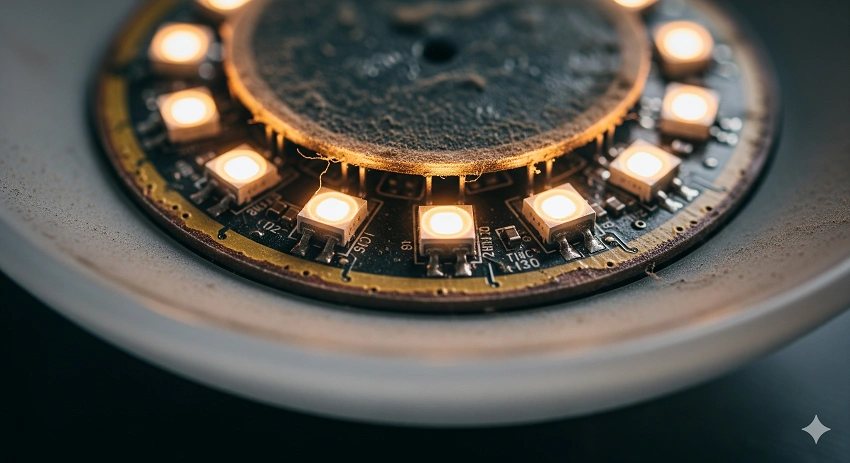
LED street lights utilize light-emitting diodes as their source of illumination. Unlike HPS, LEDs are solid-state semiconductor devices that produce light through electroluminescence. This fundamental difference in physics translates into a host of practical advantages. The most significant of these is longevity. A high-quality LED street light is rated for an effective life of 50,000 to 100,000 hours or more—dramatically outlasting the 15,000 to 24,000-hour theoretical life of an HPS lamp. This longevity directly addresses the high maintenance costs and failure rates associated with HPS, allowing cities to install and forget their lighting infrastructure for years. Furthermore, the light produced by LEDs is of a completely different quality. With a color rendering index (CRI) that can easily reach 70 or 80, and often higher, LED light is broad-spectrum and closely mimics natural daylight. Under LED illumination, colors are vibrant and true to life. This is not just an aesthetic improvement; it has profound safety implications. The human eye’s ability to discern contrast, identify objects, and react to potential hazards is directly tied to the quality of light. The superior CRI of LEDs allows drivers and pedestrians to see more clearly and react more quickly, enhancing overall road safety in a way that the monochromatic light of HPS simply cannot match.
How Do LED Street Lights Provide Better Light Quality and Control?
The advantages of LEDs extend far beyond lifespan and color rendering to the very core of how light is managed and directed. The most transformative feature is their directional nature. Unlike HPS lamps that emit light in every direction, LEDs are inherently directional, typically emitting light in a 180-degree pattern. This means the light is naturally aimed where it is needed—down onto the street. This directional characteristic, combined with precision-engineered secondary optics (lenses), allows for unparalleled control over the light distribution. Lighting designers can create specific beam patterns that perfectly match the geometry of a road, ensuring that light is placed exactly on the pavement and not wasted on building facades, backyards, or the night sky. This eliminates the problem of over-illumination under the pole and under-illumination between poles, creating a much more uniform and safer lighting environment. The light distribution curve of an LED street light can be finely tuned to achieve consistent illuminance levels across the entire roadway, maximizing both visibility and efficiency. Furthermore, because the light is directed so precisely, the overall luminaire efficiency is vastly superior. Instead of losing 30-40% of light inside the fixture, LED street lights often achieve luminaire efficiencies of 90% or more, meaning almost all the light produced by the LEDs ends up illuminating the intended target.
Why Are LED Street Lights More Energy-Efficient and Environmentally Friendly?
The energy efficiency of LED street lights is one of the most compelling reasons for their widespread adoption. This efficiency stems from a combination of factors: high source efficacy (lumens per watt from the LED chip), high luminaire efficiency (minimal optical loss), and intelligent controls. An HPS system might produce 100 lumens per watt from the lamp, but after accounting for reflector losses, the system efficacy drops significantly. An LED system, starting with a chip that might produce 150 lumens per watt and losing very little in the optics, delivers far more usable light to the street for every watt of electricity consumed. This translates into direct energy savings of 50% to 70% compared to HPS, a reduction that has a massive impact on a city’s operational budget and carbon emissions. By consuming less electricity, we also indirectly reduce the emission of harmful gases like CO2 and SO2 from power plants, directly contributing to national and global emission reduction targets.
The environmental benefits, however, go beyond energy savings. HPS lamps contain mercury, a potent neurotoxin, which is sealed within the arc tube. When these lamps reach the end of their life, they must be handled as hazardous waste. If they break in the field or are improperly discarded, they can release mercury into the environment, contaminating soil and water. LED street lights, in contrast, use solid-state technology and contain no mercury or other hazardous materials. They are fully recyclable and represent a truly environmentally friendly light source. This aspect of “green” lighting is becoming increasingly important as cities adopt stricter sustainability policies and aim for certifications like LEED for their infrastructure. The combination of energy efficiency and the absence of toxic materials makes the switch to LED a cornerstone of any serious environmental strategy for urban areas.
How Do Intelligent Control Systems Give LED Street Lights an Edge?
A final, decisive advantage of LED street lights is their seamless compatibility with modern intelligent control systems. HPS lamps have a significant drawback in this area: they require a warm-up time of several minutes to reach full brightness from a cold start and even a re-strike time to cool down before they can be re-ignited. This makes any form of dynamic, real-time control impractical. LED street lights, however, achieve full brightness instantly at the moment they are turned on, with no warm-up period whatsoever. This “instant-on” capability is the key that unlocks the full potential of smart city lighting. They can be easily integrated with photocells, motion sensors, and central management systems (CMS) that communicate via wireless networks. This allows for a range of sophisticated energy-saving strategies. For example, lights can be dimmed to 30% or 40% output during late-night hours when traffic is minimal, and then instantly brightened to 100% when a sensor detects a pedestrian, cyclist, or vehicle. This adaptive lighting can save an additional 30-40% in energy beyond the savings from the LED upgrade itself. Furthermore, a CMS provides real-time monitoring of each individual light fixture, instantly reporting failures and allowing for proactive, targeted maintenance, which eliminates the need for costly and inefficient nighttime patrols to find burnt-out lamps.
Comprehensive Comparison Table: LED Street Lights vs. HPS
The following table summarizes the key differences between LED street lights and traditional high-pressure sodium lamps, highlighting the superior performance of LED technology across nearly every metric.
| Feature | High-Pressure Sodium (HPS) | LED Street Light |
|---|---|---|
| Luminous Efficacy (System) | Moderate (80-140 lm/W source, but lower system efficacy due to optical losses) | High (130-160+ lm/W, with minimal optical loss) |
| Color Rendering Index (CRI) | Poor (20-25), monochromatic orange light | Excellent (70-90+), broad spectrum, true colors |
| Lifespan | Short to Moderate (10,000 – 24,000 hours theoretical, lower in practice) | Very Long (50,000 – 100,000+ hours) |
| Light Distribution & Control | Poor (Omnidirectional, relies on inefficient reflectors, poor uniformity) | Excellent (Directional, precision optics, high uniformity) |
| Start-up / Restrike Time | Slow (5-10 minutes warm-up, cannot instant-restrike) | Instant (Full brightness immediately, no restrike delay) |
| Environmental Impact | High (Contains toxic mercury, hazardous waste disposal) | Low (No mercury, fully recyclable, eco-friendly) |
| Compatibility with Smart Controls | Poor (Warm-up time prevents effective dimming/sensing) | Excellent (Fully dimmable, integrates with motion sensors and CMS) |
| Energy Consumption & Savings | Baseline (High energy use, significant waste) | 50-70% reduction vs. HPS, plus additional savings from adaptive controls |
In conclusion, the comparison between LED street lights and high-pressure sodium lamps is overwhelmingly one-sided. While HPS served its purpose for many decades, its inherent technical limitations—poor color rendering, inefficient light distribution, environmental hazards, and incompatibility with modern controls—make it a technology of the past. LED street lights address every single one of these shortcomings, offering a solution that is more efficient, longer-lasting, safer, and more environmentally responsible. For any city or municipality looking to reduce costs, lower its carbon footprint, and improve the quality of life for its citizens, the choice is clear: the future of road lighting is LED.
Frequently Asked Questions About LED and HPS Street Lights
Can I directly replace an HPS bulb with an LED in my existing street light fixture?
In most cases, it is not recommended to simply replace the HPS lamp with an LED “corn cob” or screw-in bulb. The optics, heat sinking, and electrical drivers are completely different. For a proper and safe retrofit, you should either replace the entire luminaire with a purpose-built LED street light or use a qualified LED retrofit kit designed for your specific fixture, which replaces the optical assembly and driver.
Is the orange light from HPS lamps better for fog than white LED light?
Historically, the yellow/orange light of HPS was considered better for fog penetration. However, modern LED street lights often use a correlated color temperature (CCT) of 3000K or 4000K, which has a balanced spectrum. While the long-wavelength yellow light does scatter less, the superior intensity and beam control of LEDs often provide better overall visibility in fog. Furthermore, many new LED fixtures can be specified with a “warm” 2700K-3000K CCT to maximize weather performance.
How much money can a city save by switching to LED street lights?
The savings are substantial. Cities typically see a 50-70% reduction in energy costs for street lighting immediately after an LED conversion. When combined with reduced maintenance costs (due to the much longer lifespan of LEDs) and the potential for adaptive dimming controls, the total operational cost savings often pay for the entire project within 5 to 7 years, after which the city continues to save millions annually.