Understanding the Shift from Metal Halide to LED in High-Power Lighting
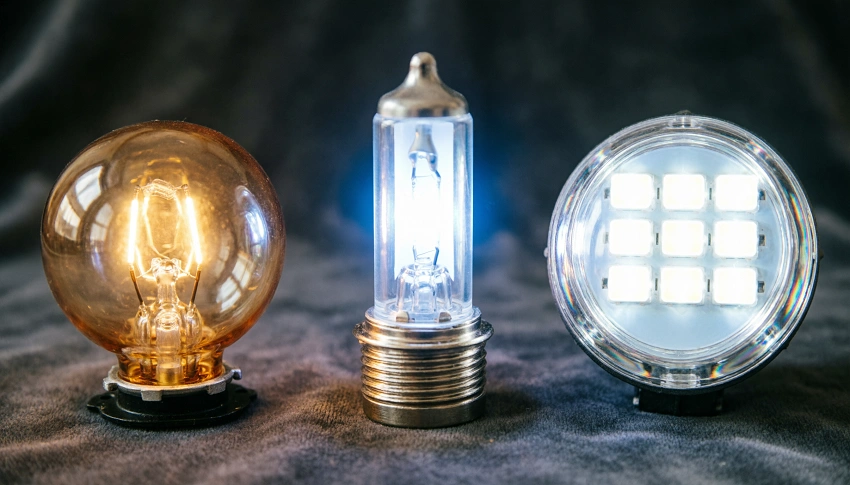
For decades, the 1000-watt metal halide lamp has been a workhorse in the world of high-intensity lighting. These powerful lamps have illuminated our largest spaces: sports stadiums, industrial warehouses, construction sites, airport hangars, and parking lots. Their ability to produce a high volume of light from a single, relatively compact source made them the go-to choice for applications where flooding an area with light was the primary goal. However, the lighting landscape has been fundamentally transformed by the advent of high-power LED technology. Today, a 500-watt LED flood light can not only match but often exceed the light output of a traditional 1000W metal halide lamp, while consuming half the electricity. This shift represents one of the most significant opportunities for energy savings and operational efficiency in commercial and industrial sectors. Yet, a common and costly mistake persists: many people assume they need to replace a 1000W metal halide lamp with another 1000W light source, regardless of the technology. This guide will clarify the crucial differences between these two lighting giants, focusing on the most important metric—lumens—and explaining why a 500W LED is the intelligent, modern replacement for a 1000W metal halide.
What Is a 1000W Metal Halide Lamp and How Does It Perform?
A 1000-watt metal halide lamp is a type of high-intensity discharge (HID) lamp that produces light by passing an electrical arc through a gaseous mixture of mercury, metal halide salts, and argon. This arc excites the metal halides, creating a bright, white light that was a significant improvement over the orange glow of high-pressure sodium lamps. In terms of raw light output, a 1000W metal halide lamp is a powerful source. However, its performance is not uniform and comes with significant caveats. The lumen output of these lamps can vary dramatically depending on the specific type, brand, and age of the lamp. On average, a standard 1000W metal halide lamp will produce between 60,000 and 110,000 initial lumens. This wide range is the first indicator of its inconsistency. Furthermore, this initial output is misleading because metal halide lamps suffer from rapid lumen depreciation. Within the first few thousand hours of operation, a metal halide lamp can lose 20% to 30% of its initial light output. Its luminous efficacy, or efficiency, ranges from about 60 to 110 lumens per watt. This means for every watt of electricity it consumes, it produces significantly less usable light compared to modern LEDs. The lamp also requires a warm-up time of several minutes to reach full brightness and cannot be restruck immediately after a power interruption, which are major operational disadvantages.
What Is a 500W LED Flood Light and Why Is It a Superior Replacement?
A 500-watt LED flood light is a solid-state lighting device that uses an array of light-emitting diodes to produce illumination. Unlike the gas-based, high-temperature process in a metal halide lamp, LEDs generate light through electroluminescence in a semiconductor. This fundamental difference in technology is the source of all its advantages. The most critical advantage is its efficiency. A high-quality 500W LED flood light, such as those manufactured by OAK LED, can achieve a luminous efficacy of 170 lumens per watt or even higher. This means a single 500W LED fixture can produce approximately 85,000 lumens or more. To put this in perspective, this level of output places it squarely in the upper range of what a 1000W metal halide can produce, but using only half the energy. Furthermore, this light output is much more consistent and stable over time. LEDs experience very slow lumen depreciation, meaning that 85,000-lumen figure will remain relatively constant for tens of thousands of hours, unlike the metal halide which will dim significantly. The 500W LED also offers instant-on functionality, reaching full brightness the moment it is switched on, and is unaffected by frequent on/off cycling, making it ideal for use with motion sensors and intelligent controls.
Why Does Lumen Output Matter More Than Wattage When Comparing These Lights?
This is the single most important concept to grasp when replacing any old lighting technology with LED. Wattage is a measure of energy consumption—it tells you how much electricity a device uses. Lumens are a measure of light output—they tell you how much light a device produces. When your goal is to illuminate a space, you are buying lumens, not watts. A 1000W metal halide and a 500W LED are both using electricity, but they convert that electricity into light with vastly different efficiencies. The metal halide is an inefficient engine, turning a large amount of fuel (watts) into a moderate amount of light (lumens). The LED is a highly efficient engine, turning a small amount of fuel into a large amount of light. Therefore, focusing on matching the old wattage (1000W) would lead you to install an enormously overpowered and wasteful 1000W LED system. The correct approach is to identify the light output you need. If your 1000W metal halide was producing, for example, 80,000 lumens (after accounting for its initial output and typical depreciation), then you need an LED light that produces 80,000 lumens. As we’ve seen, a 500W LED can comfortably deliver that, making it the perfect lumen-for-lumen replacement, not a watt-for-watt replacement. This is the key to a successful and cost-effective LED retrofit.
How to Calculate the Correct LED Wattage to Replace a 1000W Metal Halide
Making the switch from a 1000W metal halile to LED involves a simple, two-step calculation focused on lumens. First, you need to estimate the actual light output of your existing metal halide lamp. Since the output varies, a good rule of thumb for a standard probe-start 1000W metal halide is to assume it produces around 80,000 to 90,000 initial lumens. However, to be more accurate, you can check the lamp’s specification sheet for its initial lumen rating. Let’s use 85,000 lumens as a realistic target for the light level you wish to maintain or achieve. The second step is to divide this lumen target by the luminous efficacy of the LED flood light you are considering. For a high-efficiency LED, let’s use 170 lumens per watt. The calculation is: 85,000 lumens / 170 lm/W = 500 watts. This simple calculation shows that a 500W LED flood light is the ideal equivalent. However, this is a baseline. If your space requires higher light levels than what the old system provided, you might choose a 600W or 720W LED. Conversely, if the old system was over-lit and you want to save even more energy, a 400W LED with very high efficacy might suffice. This lumen-based approach gives you the flexibility to tailor the new lighting to your exact needs, rather than being locked into an outdated wattage.
What Are the Key Benefits of Replacing a 1000W Metal Halide with a 500W LED?
The decision to replace a 1000W metal halide lamp with a 500W LED flood light is driven by a multitude of compelling benefits that go far beyond simple energy savings. The most immediate and impactful benefit is, of course, energy efficiency. Reducing power consumption from 1000W to 500W results in a 50% reduction in energy use for that fixture. For a facility running dozens or hundreds of lights, this translates to tens of thousands of dollars in annual electricity cost savings. The second major benefit is longevity. A 1000W metal halide lamp might last 10,000 to 20,000 hours under ideal conditions, but its light output degrades significantly during that time. A 500W LED flood light is typically rated for 50,000 to 100,000 hours of useful life (to L70), and it maintains a much higher percentage of its initial brightness throughout that period. This drastically reduces maintenance costs and the disruption of having to replace lamps in hard-to-reach locations with scissor lifts or cranes. Other key benefits include superior light quality with higher CRI for better color rendering, instant-on and instant-restrike capability, and the ability to be easily integrated with smart controls for dimming and motion sensing, which can unlock even more energy savings. Furthermore, LEDs contain no hazardous mercury, making them an environmentally friendly choice and simplifying disposal at the end of their long life.
1000W Metal Halide vs. 500W LED Flood Light
The following table provides a clear, side-by-side comparison of the key performance indicators for a 1000W metal halide lamp and a 500W LED flood light.
| Feature | 1000W Metal Halide Lamp | 500W LED Flood Light |
|---|---|---|
| Power Consumption | 1000 Watts | 500 Watts (50% less energy) |
| Typical Lumen Output | 60,000 – 110,000 lumens (varies, depreciates rapidly) | ~85,000 lumens (stable, minimal depreciation) |
| Luminous Efficacy (lm/W) | 60 – 110 lm/W | ~170 lm/W (much higher efficiency) |
| Lifespan (to L70) | 10,000 – 20,000 hours | 50,000 – 100,000+ hours |
| Start-up Time | 5-10 minutes warm-up; slow restrike | Instant full brightness; instant restrike |
| Color Rendering Index (CRI) | 65-75 (moderate, colors appear dull) | >80 (excellent, true-to-life colors) |
| Environmental Impact | Contains mercury; hazardous waste | No mercury; fully recyclable |
| Maintenance | High (frequent relamping) | Very low (long life reduces replacement) |
This comparison makes it evident that the 500W LED flood light is not just an alternative to the 1000W metal halide; it is a superior replacement in every measurable way. It delivers equal or better light output, consumes half the energy, lasts many times longer, and provides a higher quality of light with none of the environmental hazards. When planning a lighting retrofit, focusing on lumens and making the switch from 1000W metal halide to 500W LED is one of the most impactful and financially sound decisions a facility manager can make.
Frequently Asked Questions About 1000W MH to 500W LED Replacement
Can I directly replace a 1000W metal halide bulb with a 500W LED screw-in bulb?
It is not recommended to simply replace the lamp. Metal halide fixtures use a ballast that is not compatible with LEDs. For a safe and effective replacement, you must either replace the entire luminaire with a purpose-built 500W LED flood light or use a qualified LED retrofit kit that bypasses the existing ballast and provides a new driver and LED light engine.
Will a 500W LED be as bright as my old 1000W metal halide?
Yes, a high-quality 500W LED flood light will typically be as bright or brighter than a standard 1000W metal halide. While the metal halide might have a higher initial lumen rating, it loses brightness quickly. A 500W LED provides a stable, consistent light output of around 85,000 lumens, which is in the upper range of what a 1000W MH produces, and with better optical control, the usable light on the ground is often superior.
How much money will I save by switching from 1000W MH to 500W LED?
You will save at least 50% on the energy costs for that specific light, as you’re going from 1000W to 500W. For example, running one 1000W light for 12 hours a day at $0.12 per kWh costs about $525 per year. A 500W LED would cost about $262 per year for the same light, saving $263 per fixture annually. For a facility with 100 lights, that’s over $26,000 in energy savings per year, plus significant maintenance savings from the longer LED lifespan.